
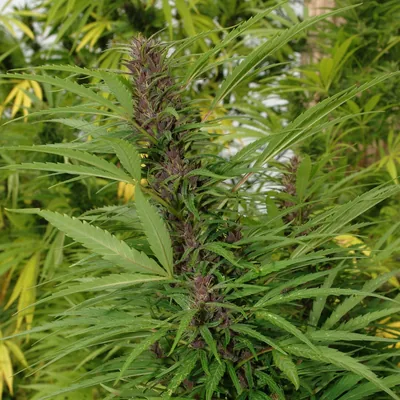
Rome started with the root.
Around 77 CE, Pliny the Elder finished the Natural History — thirty-seven books setting down everything Rome believed it knew.
Hemp appears in it twice, one book apart, though the two entries barely seem to describe the same plant.
On this page
Tales of two hemps.
In Book Nineteen it is a crop: a plant useful for making ropes, sown thick so the stalks run thin, plucked after the vintage and cleaned by lamplight — the fibre that rigged the Roman fleet.
In Book Twenty it is a medicine: radix articulos contractos emollit in aqua cocta, the root, boiled in water, used to soften contracted joints, relieve gout and manage similar violent pain. He notes that raw, it is good for burns[1].
Pliny was documenting health related effects of plants nineteen centuries before anyone could identify a CB1 receptor.
This is not to say he was correct. Research indicated the root carries almost none of the cannabinoids the flower does — being that different a part of the plant[2].
What stands out is how early this plant was reduced to an essence and applied to the body. Not swallowed or smoked — at least not in Pliny's account.
Dioscorides, the other well-known Roman botanist whose work influenced centuries after, also writes of two hemps[3] - a kannabis cultivated for rope and pressed into juice for treating earaches, and a kannabis of different description used much as Pliny describes.
One species, many, many lives.
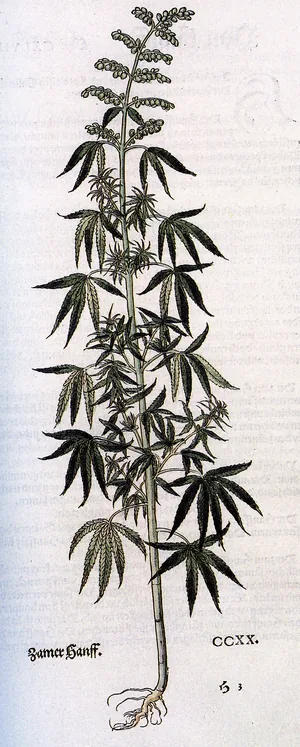
Hemp is Cannabis sativa L. So is the plant that gets you high, and so is the plant that becomes rope. One species, bred into lives that look unrelated: a stalk grown for fibre, sometimes to four metres — the word canvas descends from cannabis — and a squat, resin-heavy flower bred toward a single molecule. The woodcut above is from Leonhart Fuchs's German herbal, the New Kreüterbuch, printed in Basel in 1543: hemp as it was known for most of its history, a crop of fibre and seed.
Extracts pressed from hemp plants vary widely by genetics and the life a plant leads before harvest. All of that goes into a plant's chemistry: which cannabinoids it makes, in what proportion, alongside which terpenes. For instance, many cannabis sativa strains produce little to no psychoactive THC in their lifecycle.
Strain names themselves are a looser guide than they look — researchers who genotyped 14,031 markers across 81 marijuana and 43 hemp samples found the names "often do not reflect a meaningful genetic identity",[4] a finding later work confirmed.[5]
The fork every cannabis plant inherits
That chemistry comes down to a fork. Every cannabis plant builds its cannabinoids from a single precursor, CBGA — fairly called the mother cannabinoid — and then routes it. Inherit one enzyme, CBDA synthase, and the plant sends CBGA toward CBD. Inherit the other, THCA synthase, and the same raw material goes toward THC. Inherit both and it makes a measure of each.[6] This is why CBD leads in some plants and barely registers in others — the branch the plant was born onto, settled at the seed.
Sort plants by that fork and a handful of chemical types emerge. THC-dominant plants, grown to be smoked. CBD-dominant plants, where CBD leads and THC stays at a trace. Balanced plants carrying both. Fibre plants running almost pure stalk — the rope from the first paragraph. One species, several chemical destinies.
Which makes the line between "hemp" and "marijuana" a legal one. In US law it is a number: 0.3% Δ9-THC by dry weight.[7] Below it the plant is legally hemp, above it legally marijuana.
The lock before the key
None of this was knowable before 1964. One laboratory changed that.
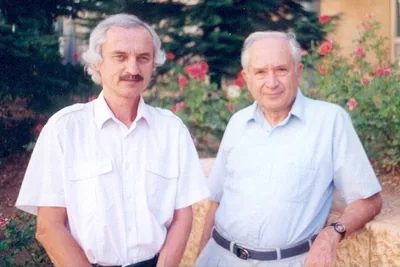
That year, at the Weizmann Institute, Raphael Mechoulam and Yechiel Gaoni isolated tetrahydrocannabinol and worked out its structure[8] — the first time anyone established what the active compound in this plant was. Mechoulam got the material from the Israeli police: his superior made a phone call, and Mechoulam went and picked up five kilograms of confiscated hashish.[9] He was thirty-three.
Then in 1990, a group at the National Institute of Mental Health cloned a receptor in rat brain that responded to those exact compounds[10].
Another receptor — outside the brain — was then characterised in spleen & immune tissue in Cambridge three years later.[11] All mammals were found to carry two receptors shaped to fit a molecule from a plant most would never encounter. Different locks were being found by experimenting with same key.
Mechoulam's laboratory kept going. In 1992 William Devane, Lumír Hanuš and Mechoulam isolated a compound from pig brain that also bound to those receptors and named it anandamide, from the Sanskrit ānanda: bliss.[12]
Three years later the same group found a second compound, 2-arachidonoylglycerol — 2-AG.[13]
They had discovered endocannabinoids, compounds the body makes itself, that bind to the receptors as needed, a network nobody suspected until a plant led them to it, and is still named after that plant. It is an unfortunate name. A system that runs in every body, whether or not anyone uses hemp, is still named after the plant that revealed it.
Mechoulam worked on it for five more decades and died in 2023, at ninety-two. Most of endocannabinoid science and today's medical cannabis world itself descends from five kilograms of confiscated hashish and this chemist who wanted to know what was in it.
The system runs through the skin
The network is not confined to the brain and the gut, where it was first found. Skin is the largest organ in the body, and it carries a dense share of it.
In 2005 a group in Münster mapped where the receptors sit in human skin. CB1 and CB2 turned up almost everywhere the tissue does its work — on the keratinocytes of the epidermis, on the hair follicles, on the sebaceous and sweat glands, on the skin's own mast cells and macrophages, and on the nerve fibres threaded through all of it. In the epidermis and the glands the two sat in a complementary pattern, the tissue in effect dividing the labour between them.[14]
And the skin does not only receive these signals. It makes them. Cutaneous cells produce their own endocannabinoids — anandamide and 2-AG, the same molecules the brain runs on — and carry the full set of enzymes to build them and break them down. A loop that runs locally, not an outpost of the system in the brain. A review four years later drew the findings together into a cutaneous endocannabinoid system,[15] a subject in its own right, and one researchers took to calling the "c(ut)annabinoid" system.[16]
What it governs is ordinary skin housekeeping: how quickly keratinocytes divide and mature into the barrier,[17] how much oil the sebaceous glands release,[18] where the hair-growth cycle sits, how the nerve endings read heat, pressure and itch. It behaves less like a switch than a thermostat — and when researchers disabled it in animals, the skin's inflammatory response ran hotter, not cooler, which is the mark of a brake rather than an accelerant.[19]
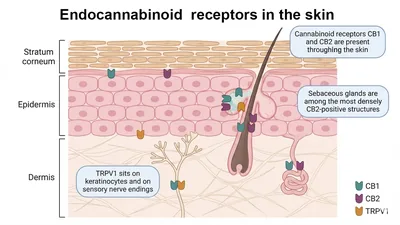
One detail matters for anything applied to the surface. CB2, the receptor most tied to inflammation, sits out here — on the immune cells and the glands, well away from the brain. A compound can meet it at the skin without entering the bloodstream or crossing into the head. Peripheral by design.
That work is now twenty years old and uncontested. It is why a botanical applied to skin is a coherent proposition rather than a fashionable one — the receptors are already there, and a system built to use them.
Getting through
All of that sits under a barrier built to keep things out.
The stratum corneum is the top fraction of a millimetre — dead, flattened cells packed in a matrix of ceramides, cholesterol and free fatty acids. In 1983 Peter Elias proposed the model that has held ever since: two compartments, with the barrier belonging not to the cells but to the lipid between them.[20] Bricks and mortar is the shorthand that followed. It is why skin works, and why most of what is put on it stays on it.
What crosses does so on two conditions. Small, and oily. The working ceiling, drawn from the drugs and contact allergens that are known to get through, sits near five hundred daltons — above that, dermatologists argue, molecules simply do not pass the corneal layer.[21] Cannabidiol is 314. β-caryophyllene is 204. Both are far more at home in fat than in water, which is the second condition, and which decides the route: through the mortar, not the bricks.
There is a second door. Hair follicles run straight down through the barrier, and a Berlin group showed in 2008 that closing them off measurably slows what reaches the skin — the follicle is a shunt, not a detail.[22] Worth noting where that leaves things: the follicle and its sebaceous gland are among the most densely receptor-populated structures in the whole organ. The fastest way in happens to end where the system is thickest.
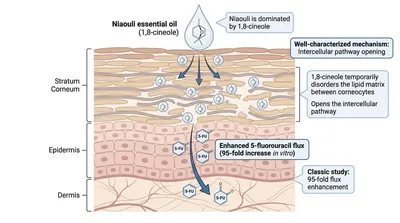
And the mortar is not fixed. In 1991 two pharmacists at Bradford ran a series of terpenes against 5-fluorouracil, measuring how much more of it crossed human epidermis with each one present.
5-FU is a chemotherapy drug, and it appears here for none of the reasons it is usually named. It is water-loving, it crosses skin badly, and that is exactly why they chose it: if a terpene can move that, the terpene is doing something real to the barrier.
α-Pinene doubled it. 1,8-cineole, the terpene that dominates eucalyptus, raised it nearly ninety-five-fold[23]. The terpenes were not carrying anything through. They were loosening the lipid the molecule had to cross.
Which is another thing terpenes turn out to do well.
Terpenes
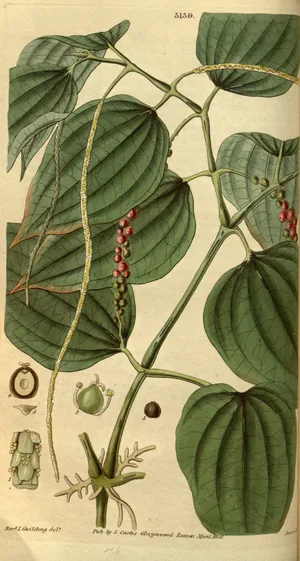
Every plant with a smell owes it to terpenes — the volatile molecules behind pine and citrus peel, black pepper and lavender. Cannabis makes them by the hundred, and for a long time they were treated as the plant's perfume, pleasant, even decorative.
But terpenes are pharmacologically active in their own right. Several are studied as penetration enhancers — limonene, the cineoles — compounds that loosen the skin's outer layer and help what is applied with them move through it.[24] Others do carry scent and, at the same time, send the same signals that endocannabinoids use.
When people say hemp is more than CBD, terpenes are much of what they mean.
One of them crosses the line completely. Beta-caryophyllene — the bite in black pepper, and present in cloves, in hemp, in copaiba — is a terpene that behaves like a cannabinoid.
In 2008 a group in Zurich showed it binds the CB2 receptor at 155 nanomolar and acts there as a functional agonist, and published it under a title that is almost a shrug: "Beta-caryophyllene is a dietary cannabinoid."[25]
Proven on cells and mice, not people — but still, a plant compound working a human receptor, selectively, is not a small thing. It is one reason copaiba, which is largely beta-caryophyllene, sits in every Rockstar blend.
Keep the aroma and you keep the pharmacology. They were never two separate things.
Why the whole plant?
The instinct in lab and industry is to isolate: find the active molecule, purify it, discard the rest. It is a clean idea, and for CBD it runs into a strange result. Purified CBD, on its own, works only inside a narrow dose window — too little does nothing, too much does nothing, and the useful range is a sliver.
Add the rest of the plant back and the window opens.
In animals, a whole-plant CBD-rich extract stayed active across a broad dose range where purified CBD did not.[26] In a 2018 review of more than six hundred patients, those using whole-plant extracts reported benefit at roughly a quarter of the dose, and with fewer side effects, than those on purified CBD.[27]
The working name for this is the entourage effect — the idea that the plant's compounds do more together than any one of them does alone.[28] It is a hypothesis with real support and real gaps; it is being refined, not closed. But the direction of the evidence is steady, and it points the opposite way from isolation.
Which is roughly where Pliny began two thousand years ago — with the whole root, simply applied.
Nature made this particular plant to be self-regulating, across dozens of chemical compounds that themselves evolve through the lifecycle of the plant from harvest to use. Why would we break that apart when it comes to the body?
References
- [1] Pliny the Elder, Natural History, Book XIX (hemp as rope-fibre: sown thick, plucked after the vintage, cleaned by lamplight) and Book XX, ch. 97 ("radix articulos contractos emollit in aqua cocta, item podagras et similes impetus"). Bostock & Riley (tr.), London 1855; Loeb Classical Library ed. ↩
- [2] Ryz NR, Remillard DJ, Russo EB. Cannabis Roots: A Traditional Therapy with Future Potential for Treating Inflammation and Pain. Cannabis Cannabinoid Res. 2017;2(1):210–216. PMID 29082318 · doi:10.1089/can.2017.0028 · <https://doi.org/10.1089/can.2017.0028> ↩
- [3] Dioscorides, De Materia Medica, Book 3 ↩
- [4] Sawler J, Stout JM, Gardner KM, et al. The Genetic Structure of Marijuana and Hemp. PLoS One. 2015;10(8):e0133292. PMID 26308334 · doi:10.1371/journal.pone.0133292 · <https://doi.org/10.1371/journal.pone.0133292> ↩
- [5] Schwabe AL, McGlaughlin ME. Genetic tools weed out misconceptions of strain reliability in Cannabis sativa. J Cannabis Res. 2019;1:3. PMID 33526091 · <https://pubmed.ncbi.nlm.nih.gov/33526091/> ↩
- [6] de Meijer EPM, Bagatta M, Carboni A, et al. The inheritance of chemical phenotype in Cannabis sativa L. Genetics. 2003;163(1):335–346. PMID 12586720 · doi:10.1093/genetics/163.1.335 · <https://doi.org/10.1093/genetics/163.1.335> ↩
- [7] Agriculture Improvement Act of 2018, 7 U.S.C. §1639o: hemp is Cannabis sativa L. with no more than 0.3% Δ9-THC by dry weight. US-specific. ↩
- [8] Gaoni Y, Mechoulam R. Isolation, structure, and partial synthesis of an active constituent of hashish. J Am Chem Soc. 1964;86(8):1646–1647. doi:10.1021/ja01062a046 ↩
- [9] Sohn E. Israel: Research without prejudice. Nature. 2015;525(7570):S12–S13. doi:10.1038/525S12a — Mechoulam's own account of collecting five kilos of hashish from the police. ↩
- [10] Matsuda LA, Lolait SJ, Brownstein MJ, Young AC, Bonner TI. Structure of a cannabinoid receptor and functional expression of the cloned cDNA. Nature. 1990;346(6284):561–564. PMID 2165569 · doi:10.1038/346561a0 ↩
- [11] Munro S, Thomas KL, Abu-Shaar M. Molecular characterization of a peripheral receptor for cannabinoids. Nature. 1993;365(6441):61–65. PMID 7689702 · doi:10.1038/365061a0 ↩
- [12] Devane WA, Hanuš L, Breuer A, et al. Isolation and structure of a brain constituent that binds to the cannabinoid receptor. Science. 1992;258(5090):1946–1949. PMID 1470919 · doi:10.1126/science.1470919 ↩
- [13] Mechoulam R, Ben-Shabat S, Hanuš L, et al. Identification of an endogenous 2-monoglyceride, present in canine gut, that binds to cannabinoid receptors. Biochem Pharmacol. 1995;50(1):83–90. PMID 7605349 · doi:10.1016/0006-2952(95)00109-d ↩
- [14] Ständer S, Schmelz M, Metze D, Luger T, Rukwied R. Distribution of cannabinoid receptor 1 (CB1) and 2 (CB2) on sensory nerve fibers and adnexal structures in human skin. J Dermatol Sci. 2005;38(3):177–188. PMID 15927811 · doi:10.1016/j.jdermsci.2005.01.007 ↩
- [15] Bíró T, Tóth BI, Haskó G, Paus R, Pacher P. The endocannabinoid system of the skin in health and disease. Trends Pharmacol Sci. 2009;30(8):411–420. PMID 19608284 · doi:10.1016/j.tips.2009.05.004 · <https://doi.org/10.1016/j.tips.2009.05.004> ↩
- [16] Tóth KF, Ádám D, Bíró T, Oláh A. Cannabinoid Signaling in the Skin: Therapeutic Potential of the "C(ut)annabinoid" System. Molecules. 2019;24(5):918. PMID 30845666 · doi:10.3390/molecules24050918 · <https://doi.org/10.3390/molecules24050918> ↩
- [17] Tóth BI, Dobrosi N, Dajnoki A, et al. Endocannabinoids modulate human epidermal keratinocyte proliferation and survival. J Invest Dermatol. 2011;131(5):1095–1104. PMID 21248768 · doi:10.1038/jid.2010.421 · <https://doi.org/10.1038/jid.2010.421> ↩
- [18] Dobrosi N, Tóth BI, Nagy G, et al. Endocannabinoids enhance lipid synthesis and apoptosis of human sebocytes via cannabinoid receptor-2-mediated signaling. FASEB J. 2008;22(10):3685–3695. PMID 18596221 · doi:10.1096/fj.07-104877 · <https://doi.org/10.1096/fj.07-104877> ↩
- [19] Karsak M, Gaffal E, Date R, et al. Attenuation of allergic contact dermatitis through the endocannabinoid system. Science. 2007;316(5830):1494–1497. PMID 17556587 · doi:10.1126/science.1142265 · <https://doi.org/10.1126/science.1142265> ↩
- [20] Elias PM. Epidermal lipids, barrier function, and desquamation. J Invest Dermatol. 1983;80 Suppl:44s–49s. PMID 6189923 · <https://pubmed.ncbi.nlm.nih.gov/6189923/> ↩
- [21] Bos JD, Meinardi MM. The 500 Dalton rule for the skin penetration of chemical compounds and drugs. Exp Dermatol. 2000;9(3):165–169. PMID 10839713 · doi:10.1034/j.1600-0625.2000.009003165.x · <https://doi.org/10.1034/j.1600-0625.2000.009003165.x> ↩
- [22] Otberg N, Patzelt A, Rasulev U, et al. The role of hair follicles in the percutaneous absorption of caffeine. Br J Clin Pharmacol. 2008;65(4):488–492. PMID 18070215 · doi:10.1111/j.1365-2125.2007.03065.x · <https://doi.org/10.1111/j.1365-2125.2007.03065.x> ↩
- [23] Williams AC, Barry BW. Terpenes and the lipid-protein-partitioning theory of skin penetration enhancement. Pharm Res. 1991;8(1):17–24. PMID 2014203 · doi:10.1023/a:1015813803205. 5-FU is the study's "model polar penetrant" — a yardstick molecule, not a therapy. ↩
- [24] Sapra B, Jain S, Tiwary AK. Percutaneous permeation enhancement by terpenes: mechanistic view. AAPS J. 2008;10(1):120–132. PMID 18446512 · doi:10.1208/s12248-008-9012-0 · <https://doi.org/10.1208/s12248-008-9012-0> ↩
- [25] Gertsch J, Leonti M, Raduner S, et al. Beta-caryophyllene is a dietary cannabinoid. Proc Natl Acad Sci USA. 2008;105(26):9099–9104. PMID 18574142 · doi:10.1073/pnas.0803601105 · <https://doi.org/10.1073/pnas.0803601105> ↩
- [26] Gallily R, Yekhtin Z, Hanuš LO. Overcoming the Bell-Shaped Dose-Response of Cannabidiol by Using Cannabis Extract Enriched in Cannabidiol. Pharmacology & Pharmacy. 2015;6(2):75–85. doi:10.4236/pp.2015.62010 · <https://doi.org/10.4236/pp.2015.62010> ↩
- [27] Pamplona FA, da Silva LR, Coan AC. Potential Clinical Benefits of CBD-Rich Cannabis Extracts Over Purified CBD in Treatment-Resistant Epilepsy: Observational Data Meta-analysis. Front Neurol. 2018;9:759. PMID 30258398 · doi:10.3389/fneur.2018.00759 · <https://doi.org/10.3389/fneur.2018.00759> ↩
- [28] Russo EB. Taming THC: potential cannabis synergy and phytocannabinoid-terpenoid entourage effects. Br J Pharmacol. 2011;163(7):1344–1364. PMID 21749363 · doi:10.1111/j.1476-5381.2011.01238.x · <https://doi.org/10.1111/j.1476-5381.2011.01238.x> ↩
- [29] Santiago M, Sachdev S, Arnold JC, McGregor IS, Connor M. Absence of Entourage: Terpenoids Commonly Found in Cannabis sativa Do Not Modulate the Functional Activity of Δ9-THC at Human CB1 and CB2 Receptors. Cannabis Cannabinoid Res. 2019;4(3):165–176. PMID 31559333 · doi:10.1089/can.2019.0016 ↩
- [30] Finlay DB, Sircombe KJ, Nimick M, Jones C, Glass M. Terpenoids From Cannabis Do Not Mediate an Entourage Effect by Acting at Cannabinoid Receptors. Front Pharmacol. 2020;11:359. PMID 32269529 · doi:10.3389/fphar.2020.00359 ↩
- [31] LaVigne JE, Hecksel R, Keresztes A, Streicher JM. Cannabis sativa terpenes are cannabimimetic and selectively enhance cannabinoid activity. Sci Rep. 2021;11(1):8232. PMID 33859287 · doi:10.1038/s41598-021-87740-8 ↩
FAQs
Is all hemp the same plant?
One species, Cannabis sativa L., bred into very different lives — fibre, seed, resin. Which cannabinoids a plant makes is settled by the enzymes it inherits, long before anyone harvests it.
Is hemp oil the same as hemp seed oil?
No, and it's the most common mix-up in this category. Seed oil is pressed from the seed and has no cannabinoids in it. The extract comes from the flowering tops.
Will a hemp topical make me feel anything?
Our products are made for your skin, where you put them. We don't make claims about anything systemic.
Does my skin really have cannabinoid receptors?
It does. CB1 and CB2 have been mapped in human skin since 2005 ~ on the epidermis, the hair follicles, the oil and sweat glands, and the nerve fibres in the tissue.
What is beta-caryophyllene?
A terpene found in hemp, copaiba, black pepper and cloves. It's one of the few plant compounds shown to bind the CB2 receptor directly. That work is laboratory and animal research — in cells and in mice, not on skin.
Is the entourage effect real?
It's genuinely open. Two labs looked for it at the cannabinoid receptors and found nothing[29] — except a weak interaction from beta-caryophyllene,[30] which happens to be the molecule our blends are built around. A third lab, using mouse behaviour as well as binding, found the terpenes active.[31] We use the whole plant because that is how these blends have always been made, not because that argument has been won.
Which Rockstar products contain hemp?
Rockstar Woman, Rockstar Man, the Entourage Roll On and Face & Body Entourage. The hemp-free blends ~ Rockstar Woman Hemp Free and Face & Body Original ~ have everything else, without it.
Is there THC in it?
Our hemp is compliant hemp, under the 0.3% federal limit. That's a legal definition, not the same thing as THC-free, and we would rather say it that way round.