Vaginal Dryness in Menopause & Botanicals | What the Science Shows

Table of Contents
- So what *does* the science have to say about botanicals 'right down there'?
- Why mucosa is the opposite of skin
- The endocannabinoid system in vaginal and vulvar tissue
- So, what is Rockstar Woman?
- What's in the bottle, and why each ingredient is there
- How the formula engages the local endocannabinoid system
- For women who have been through more
- References
- FAQs
So what *does* the science have to say about botanicals 'right down there'?
Many women who find Rockstar Woman because they're looking for natural help with a problem that doesn't get talked about politely - vaginal dryness in menopause. Our tissues have changed. Lubrication isn't what it was. Maybe its harder to focus. Maybe sex hurts in ways that diminish desire, confidence and the list goes on.
Most end up asking some version of the same question as the practitioners I work with — naturopaths, nurses, midwives, menopause specialists — can topical botanicals actually do pharmacological work to our benefit, or not? What does scientific research actually show us?
So let's start at the beginning, with the honest short version. The mechanism is real — the compounds in Rockstar Woman are documented in peer-reviewed research, and the tissue they act on is dense with the very receptors they engage. What hasn't been done is a clinical trial of this exact formula, so I'll say supported, not proven, and show you exactly where that line falls. And it begins with one fact that changes everything about how a formula like this works: vaginal mucosa is not skin.
Why mucosa is the opposite of skin
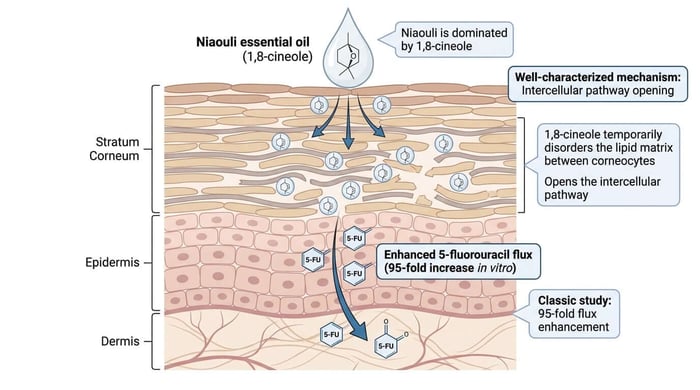
In the CBD Roll-On post I talked for awhile about the stratum corneum — the dense, ordered, brick-and-mortar lipid architecture that makes the skin a remarkable barrier. The whole pharmacology of a topical roll-on is built around the question of how to cross it. Vaginal mucosa is a different problem entirely.
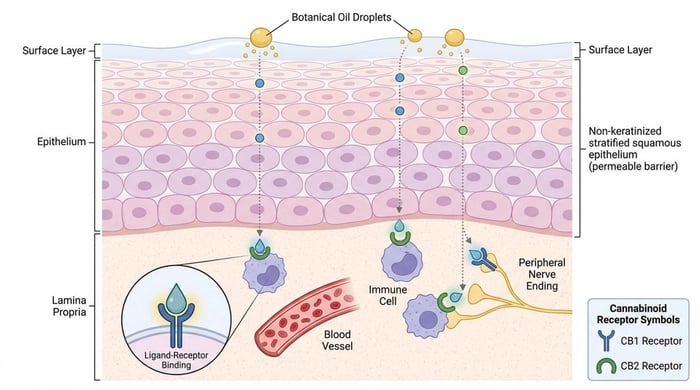
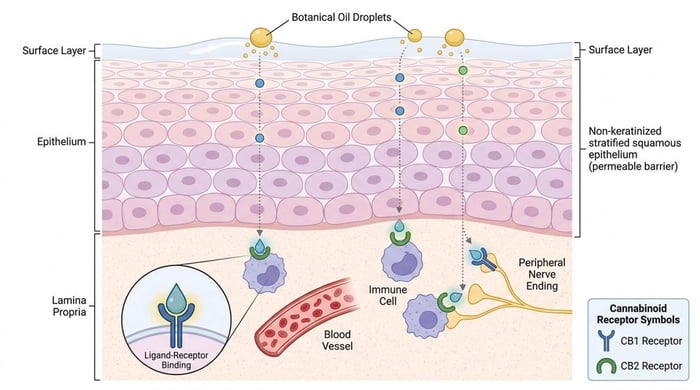
Vaginal and vulvar mucosa are still stratified epithelium, but the surface is hydrated and lacks the ordered lipid matrix that defines skin's barrier function. Mucosal tissue is built for exchange — it's the body's interface for absorption, immunity, and secretion. That changes the pharmacology in three important ways.
First, delivery is meaningfully more efficient. In the pharmaceutical sciences literature, the vaginal route has been characterized as more efficient than transdermal delivery for many lipophilic compounds — it's an established route for hormone delivery, antifungal delivery, and several systemic drug routes precisely because mucosa accepts what skin resists.
Second, the formulation problem inverts. With the Roll-On, the design challenge is getting compounds through a barrier that is built to keep them out. With Rockstar Woman, the design challenge is delivering compounds at an effective concentration without irritation to tissue that is more permeable, more vascular, and, in menopausal women, often thinner and more reactive than it used to be. Every choice in the formula is shaped by that constraint.
Third, what's underneath the surface matters more than ever. Once a compound is through, it encounters a tissue rich in endocannabinoid system receptors and the immune-cell populations that express them. That is what this article is about.
The endocannabinoid system in vaginal and vulvar tissue
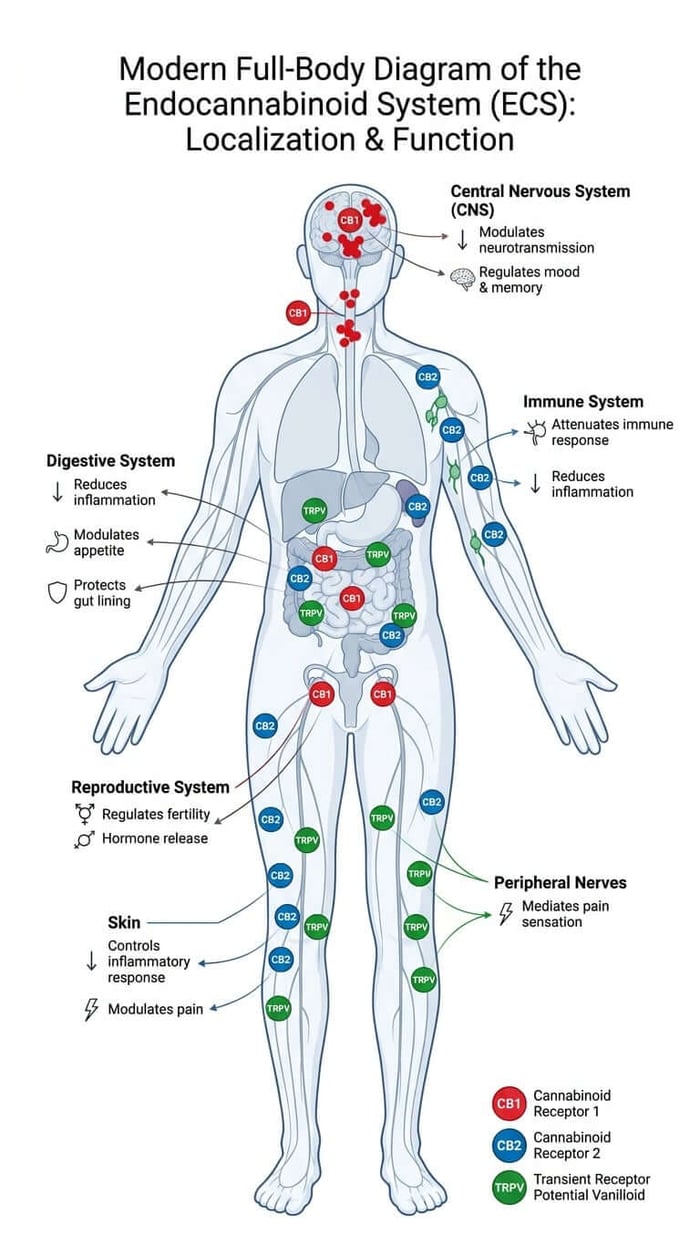
The endocannabinoid system is a signaling network expressed throughout the body. It's the system your body uses to manage pain, inflammation, immune response, mood, sleep, appetite, reproductive function, and tissue homeostasis. It operates through two primary receptor types: CB1, concentrated in the central and peripheral nervous system, and CB2, concentrated in immune tissue and at sites of inflammation. The system makes its own ligands — anandamide and 2-arachidonoylglycerol, or 2-AG, the one I call the Rockstar molecule — and breaks them down with its own enzymes.
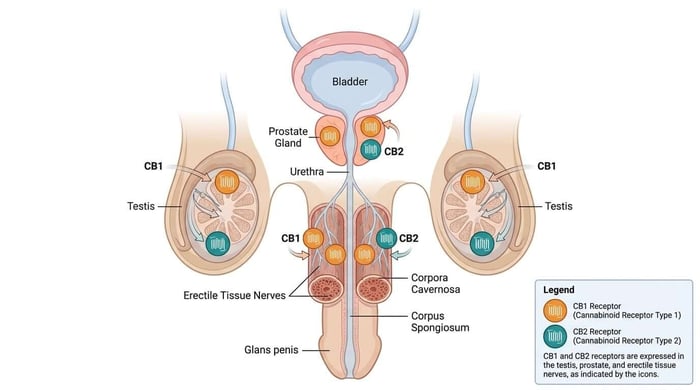
Both CB1 and CB2 receptors have been characterized in the female reproductive system, including in the ovaries, uterus, fallopian tube, and broader urogenital tissue, with CB1 protein expression demonstrated by immunohistochemistry in the smooth muscle and luminal epithelium of human fallopian tube specifically1112. CB2 is expressed on the mast cells, macrophages, and lymphocytes that populate mucosal tissue throughout the body — best characterized in the gut and respiratory mucosa — where the receptor regulates degranulation and local inflammatory tone13. CB1 and CB2 are also expressed on peripheral nerve terminals, where they modulate neuropeptide release and nociceptive signaling13.
Direct, vaginal-tissue-specific cannabinoid receptor work is a more recent and smaller body of research. A 2025 study in Biomolecules demonstrated that CB1 receptor activation regulates vaginal secretion in a murine model — establishing that functional cannabinoid receptors are present and signaling in vaginal tissue, while also documenting that chronic systemic CB1 activation reduces basal vaginal moisture14. That last detail matters and I want to surface it rather than skip past it: it is consistent with the longstanding clinical observation that some women who use cannabis systemically report vaginal dryness. It is a finding about systemic, chronic, full-agonist CB1 activation throughout the body. It is a different pharmacological situation from local, topical application of a full-spectrum phytocannabinoid extract to mucosa, where the compound profile is broader, the activation is local rather than systemic, and the dose-response curve is different. The study confirms that the receptor system is there and functionally responsive in this tissue. The implications for a topical application are not the same as the implications for inhaled or oral cannabis use.
Beyond the murine vaginal-secretion work, the broader cannabinoid-in-gynecology literature has characterized CB1 and CB2 expression across female reproductive tissues and connected receptor pharmacology to clinical conditions including endometriosis, chronic pelvic pain, dysmenorrhea, and gynecological inflammation1115. The receptor mechanisms are well-supported for the class. The compound pharmacology is well-supported for the class. What is not yet published is a dedicated pharmacokinetic study quantifying how much CBD or β-caryophyllene, applied vaginally in an oil-based botanical at Rockstar Woman's specific loading percentages, reaches the receptor populations in this tissue at a concentration sufficient to act. I'll come back to this. The mechanism is supported. The specific clinical pharmacokinetic study of this product has not been done.
So, what is Rockstar Woman?
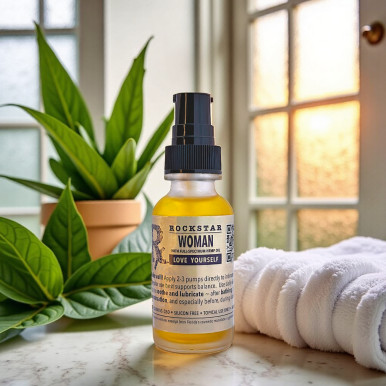
Rockstar Woman
$69.00
Rockstar Woman | Natural Menopause Support Safe, effective, topical support for vaginal dryness & discomfort, body temperature dysregulation and lost libido. 30ml (1 fl oz)...… read more
An oil-based intimate botanical built around local engagement with the endocannabinoid system, delivered through a mucosal-compatible carrier that contributes its own antifungal and antibacterial mechanism. The cannabinoid payload is full-spectrum hemp extract at meaningful concentration. The CB2 agonist load is provided by copaiba's β-caryophyllene fraction. The antimicrobial architecture is layered across the fractionated coconut oil base, the copaiba, the ginger CO₂, and the frankincense CO₂ extracts. The compounds used are documented in peer-reviewed literature for their respective mechanisms. The extraction methods are matched to the compounds — CO₂ where CO₂ is needed, essential oil where essential oil is appropriate.
What's in the bottle?
To support dealing with vaginal dryness in menopause, Rockstar Woman is a 30ml fractionated coconut oil base carrying a full-spectrum hemp extract and a defined botanical stack chosen for activity in mucosal tissue. The architecture is different from the Roll-On's because the problem is different.
Full-spectrum hemp extract Whole-plant cannabinoids, native terpenes and flavonoids, with CBD dominant.
Ginger CO₂ extract Gingerols and shogaols with documented antibiofilm and antifungal activity, studied specifically against drug-resistant vulvovaginal candidiasis in vaginal tissue.
German Chamomile CO₂ Chamazulene — the deep-blue anti-inflammatory compound also visible in the Roll-On.
Vanilla extracts Vanillin and the broader vanilla fraction; transitioning from tincture to CO₂ extract in the next batch.
Why each ingredient is there
Fractionated coconut oil FCO is the carrier and it is not inert. The fractionation process concentrates the medium-chain fatty acid fraction — caprylic acid (C8) and lauric acid (C12) — and removes the longer-chain triglycerides that make whole coconut oil solid at room temperature. Caprylic and lauric acid have an extensive peer-reviewed antifungal and antibacterial literature against Candida albicans specifically. In one published study, both fatty acids demonstrated significant anticandidal activity, with caprylic acid achieving the highest antifungal potential at a minimum inhibitory concentration of 40 micrograms per milliliter1. Subsequent in-vitro work has characterized caprylic acid as disrupting more than 83% of the fungal cell wall membrane and inhibiting the efflux pumps that drug-resistant Candida strains use to survive antifungal pressure2. This matters for two reasons. First, the carrier is contributing its own pharmacological activity at the application site rather than just transporting other compounds. Second, the carrier is fully biocompatible with vaginal mucosa and is not disruptive to the Lactobacillus-dominant vaginal microbiome that healthy mucosal tissue depends on. The base is an active ingredient.
Full-spectrum hemp extract As in the Roll-On, this is whole-plant extract — the full phytochemical profile, including CBD, the minor cannabinoids present in trace amounts, the plant's own terpene fraction, and the flavonoid compounds that accompany them. The published comparative research on whole-plant extract versus isolated CBD has documented different dose-response profiles for inflammation between the two preparations, with the whole-plant extract showing a more linear and predictable response across a range of doses while isolated CBD showed a narrower effective window3. That work was done with systemic administration in an animal model rather than topical or intravaginal application — but the underlying principle, that an integrated phytochemical matrix behaves differently in the body than an isolated single compound, applies regardless of route. This is consistent with the broader entourage-effect framework4, which is supported by directional evidence, not by settled fact. In Rockstar Woman the hemp extract goes in first, before any of the botanicals, as the foundation of the formula. The cannabinoid load is 6.7% of the bottle by volume — meaningfully concentrated for a topical preparation.
Copaiba essential oil. Copaiba is dominated by β-caryophyllene (BCP), and BCP has been characterized in published research as a selective CB2 receptor agonist with documented action in animal and in-vitro studies5. This is the same compound that does CB2 work in the Roll-On — and CB2-expressing mucosal immune cells and peripheral nerve terminals13 are well-suited targets for a topical delivery route at a mucosal application site. BCP is also a sesquiterpene with documented antibacterial and antifungal activity in its own right. A scientometric review of the copaiba literature identified antimicrobial activity as the single most-studied biological effect of copaiba, accounting for roughly 30% of the published research across thirteen categories of biological activity6. A subsequent systematic review confirmed bactericidal or bacteriostatic effects in all in-vitro analyses examined, with particularly notable activity against azole-resistant Candida strains7.
Ginger CO₂ This is the most clinically specific ingredient in the formula. Six bioactive components of ginger were tested in published research against a fluconazole-resistant Candida albicans strain. 6-gingerol, 8-gingerol, and 6-shogaol all effectively inhibited biofilm formation. 6-shogaol at 10 micrograms per milliliter significantly reduced C. albicans biofilm formation. Both 6-gingerol and 6-shogaol inhibited hyphal growth and prevented cell aggregation — all of this demonstrated against a drug-resistant strain8. A separate published study evaluated ginger extract specifically against drug-resistant vulvovaginal candidiasis in a murine model, assessing antifungal activity through agar diffusion, macrodilution, time-kill, and biofilm eradication methods, and measuring therapeutic outcomes by analyzing fungal load, pro-inflammatory cytokines, and histological changes in vaginal tissue9. That second study is the closest piece of published research to Rockstar Woman's application: the exact pathogen, the exact anatomical context, the exact resistance pattern. The CO₂ extract is used rather than the steam-distilled essential oil because CO₂ extraction yields the full gingerol and shogaol fraction — steam distillation does not capture these compounds at the same concentration.
Frankincense serrata CO₂ Boswellia serrata contributes AKBA — acetyl-11-keto-β-boswellic acid — which has been characterized as a selective 5-lipoxygenase inhibitor, a different anti-inflammatory mechanism than the more familiar COX pathway. AKBA has also been identified across the boswellic acid literature as the most active antimicrobial component of the Boswellia genus, with documented antibacterial activity against multiple clinically significant pathogens10. The CO₂ extraction method matters here for the same reason it matters in the Roll-On: steam distillation cannot capture the boswellic acid fraction, but CO₂ extraction can.
One open item worth disclosing. The certificate of analysis on the specific frankincense serrata CO₂ source used in current production was performed by GC-MS, which is an analytical method that cannot detect boswellic acids. HPLC analysis is required to confirm AKBA concentration in this specific extract. The CO₂ extraction method is the correct method for AKBA recovery, the supplier is a well-regarded specialty botanical extractor, and the literature on Boswellia serrata CO₂ extracts is consistent. But until we have HPLC data, the AKBA-specific antibacterial mechanism for this exact ingredient is supported as a class effect rather than confirmed for the bottle on your shelf. We're working on it.
The supporting botanical layer. German chamomile CO₂ at 0.5% contributes chamazulene — the same deep blue anti-inflammatory compound visible in the Roll-On bottle. Ylang ylang essential oil at 0.5% and sweet orange essential oil at 0.67% contribute additional monoterpene activity and the sensory profile of the formula. Vanilla botanical extract contributes vanillin and the broader vanilla phytochemical fraction; we're transitioning this ingredient from a tincture to a CO₂ extract in the next production batch for cleaner delivery in a mucosal application.
What Rockstar Woman does not contain. No glycerin. No propylene glycol. No parabens. No fragrance compounds beyond the essential oils named on the label. No menthol, capsaicin, or other counter-irritants. Rockstar Woman is an oil-based formulation, which means it is not compatible with latex condoms — oil degrades latex. Polyurethane and polyisoprene barriers are compatible. This is a label warning, not an asterisk: please pay attention to it.
How the formula engages the local endocannabinoid system
Add up the cannabinoid layer and the supporting botanical layer, and Rockstar Woman is designed to deliver, into a tissue with documented CB1 and CB2 expression, a meaningful concentration of full-spectrum hemp extract with CBD as the dominant cannabinoid; a 3.5% loading of copaiba contributing β-caryophyllene, the CB2-selective agonist documented in the published cannabinoid literature5; and a supporting fraction of α-pinene, linalool, and the chamazulene- and curcuminoid-class compounds present in the chamomile and frankincense extracts.
The Roll-On's pharmacology is dominated by the problem of crossing the stratum corneum at all. Rockstar Woman's pharmacology is dominated by what the compounds encounter on the other side of a much more permeable barrier. Once through mucosa — which lipophilic cannabinoids and terpenes are well-suited to do — the compounds encounter the endocannabinoid system in a tissue context that includes peripheral nerve endings, mucosal immune cells, and the epithelial cells themselves. CB1 activity in peripheral nerve endings modulates local nociceptive signaling13. CB2 activity on mucosal immune cells modulates inflammatory tone13. The phytochemical matrix that supports those receptor interactions, in the surrounding non-cannabinoid plant compounds, is the entourage hypothesis at the receptor level.
What this is not, importantly, is a hormonal mechanism. Rockstar Woman contains no estrogen, no estriol, no phytoestrogens at concentrations that would meaningfully bind estrogen receptors, and no other hormone-active ingredient. Its mechanism is upstream of the hormonal story — it's about supporting the local ECS-mediated signaling that is present in the tissue regardless of hormonal status. This is part of why the formula is appropriate for women who, by choice or by medical necessity, are not on estrogen therapy.
For women who have been through more
I declined chemotherapy after my colon surgery and started looking for what would help me thrive without it. I think about the women in my community who have made similar decisions, or who didn't have the choice — women whose tissue has been through breast cancer treatment, gynecologic cancer treatment, radiation, or surgical menopause, and who are now dealing with vaginal tissue that is both more reactive and more vulnerable than it was before.
The published research that intersects most closely with this population is in the antimicrobial literature. The ginger work I cited above was specifically conducted against drug-resistant vulvovaginal candidiasis — the kind of recurrent yeast infection that disproportionately affects immunocompromised women, including women who have undergone repeated antifungal courses during cancer treatment9. The copaiba research includes activity against azole-resistant Candida strains, which is the resistance pattern that emerges from those repeated treatment cycles7. The fractionated coconut oil base contributes its own caprylic and lauric acid antifungal mechanism without the synthetic adjuvants that reactive tissue often can't tolerate1.
I cannot tell you, and I am not going to tell you, that Rockstar Woman treats, prevents, cures, or heals any of this. There are no published randomized controlled trials of this specific formula in this specific population.
What I can tell you is that the formula was designed with this population in the architecture — the gentle mucosal carrier, the absence of irritants, the absence of hormones, the ingredients selected against drug-resistant pathogens specifically, the cannabinoid-and-terpene matrix selected for compatibility with the endocannabinoid receptor pharmacology.
The mechanism is supported. The compounds are correct. And no specific clinical studies in this population have ever been done.
For women in this position: please talk to your oncologist or your treating physician before adding any new product — botanical or otherwise — to your routine. This is not a hedge. There are real drug interactions to consider, particularly with certain chemotherapy agents and hormone-modulating treatments, and your treating physician knows your case in a way I cannot.
What the published literature supports strongly
- Caprylic acid and lauric acid demonstrate significant antifungal activity against Candida albicans, with caprylic acid documented at a minimum inhibitory concentration of 40μg/ml1
- Caprylic acid disrupts the fungal cell wall and inhibits efflux pumps relevant to drug-resistant Candida strains2
- Copaiba essential oil shows bactericidal or bacteriostatic activity across all in-vitro analyses examined in review, including activity against azole-resistant Candida67
- β-caryophyllene functions as a selective CB2 receptor agonist with documented action in animal and in-vitro studies5
- 6-gingerol and 6-shogaol inhibit biofilm formation and hyphal growth in fluconazole-resistant C. albicans; ginger extract has been evaluated against drug-resistant vulvovaginal candidiasis in vaginal tissue in a murine model89
- AKBA functions as a 5-lipoxygenase inhibitor and has been characterized as the most active antimicrobial of the boswellic acids10
- CB1 and CB2 receptors are expressed across the female reproductive system, with documented relevance to gynecological conditions including endometriosis and pelvic pain111215
- CB1 receptor activation regulates vaginal secretion in a murine model, establishing functional cannabinoid signaling in vaginal tissue14
- CB2 receptors are expressed on mucosal mast cells, macrophages, and peripheral nerve terminals, where activation modulates inflammatory and nociceptive signaling13
- Full-spectrum cannabis extract and isolated CBD produce different dose-response profiles for inflammation in published comparative research3
Supported as a class effect — not yet measured for this product
- Specific systemic and local tissue concentrations of any cannabinoid or terpene produced by intravaginal application of Rockstar Woman at its loading percentages
- AKBA concentration in the specific frankincense serrata CO₂ extract currently in production — supplier COA is by GC-MS; HPLC confirmation pending
- Clinical outcomes — lubrication, comfort during intercourse, recurrence rate of vulvovaginal candidiasis, quality of life — in defined populations using this product
- Direct head-to-head comparison against any other intravaginal product, botanical or pharmaceutical
The studies I would run
- A clinical pharmacokinetic study quantifying local tissue and systemic plasma concentrations of CBD and β-caryophyllene following intravaginal application
- A clinical outcomes study in menopausal women — symptom resolution, comfort, adverse-event profile — with a stratified analysis for cancer-survivor participants
- A clinical outcomes study in women with recurrent vulvovaginal candidiasis, ideally including a drug-resistant subgroup, with fungal load and inflammatory cytokines as endpoints
- HPLC confirmation of AKBA in the specific frankincense serrata CO₂ source currently in production, and ongoing batch verification once confirmed
References
- Akula S, et al. Antifungal Efficacy of Lauric Acid and Caprylic Acid — Derivatives of Virgin Coconut Oil against Candida albicans. Biomed Biotechnol Res J. 2021;5(2):229-234. Directional
- Mbim EN, et al. In-vitro Evaluation of the Antifungal Property of Cold-Pressed Coconut Oil Against Drug-Resistant Candida albicans. J Nat Sci Biol Med. 2024. Directional
- Gallily R, Yekhtin Z, Hanuš LO. Overcoming the bell-shaped dose-response of cannabidiol by using cannabis extract enriched in cannabidiol. Pharmacol Pharm. 2015;6(2):75-85. Moderate
- Russo EB. Taming THC: potential cannabis synergy and phytocannabinoid-terpenoid entourage effects. Br J Pharmacol. 2011;163(7):1344-1364. Directional
- Gertsch J, Leonti M, Raduner S, et al. Beta-caryophyllene is a dietary cannabinoid. Proc Natl Acad Sci USA. 2008;105(26):9099-9104. Moderate
- Evaluation of the Biological Activities of Copaiba (Copaifera spp): A Comprehensive Review Based on Scientometric Analysis. Front Pharmacol. 2023. Directional
- Toxicological Effects of Copaiba Oil (Copaifera spp.) and Its Active Components. Systematic review. 2023. Moderate
- Lee JH, et al. Antibiofilm and Antivirulence Activities of 6-Gingerol and 6-Shogaol Against Candida albicans Due to Hyphal Inhibition. Front Cell Infect Microbiol. 2018. Directional
- Coadministration of Ginger Extract and Fluconazole Shows a Synergistic Effect in the Treatment of Drug-Resistant Vulvovaginal Candidiasis. Infect Drug Resist. 2021. Moderate
- Effects of Frankincense Compounds on Infection, Inflammation, and Oral Health. Molecules. 2022. Moderate
- Luschnig P, Schicho R. Cannabinoids in Gynecological Diseases. Med Cannabis Cannabinoids. 2019;2(1):14-21. Moderate
- Horne AW, Phillips JA, Kane N, et al. CB1 Expression Is Attenuated in Fallopian Tube and Decidua of Women with Ectopic Pregnancy. PLoS ONE. 2008;3(12):e3969. Moderate
- Facci L, Dal Toso R, Romanello S, et al. Mast cells express a peripheral cannabinoid receptor with differential sensitivity to anandamide and palmitoylethanolamide. Proc Natl Acad Sci USA. 1995;92(8):3376-3380. Directional
- Murataeva N, Mattox S, Yust K, Straiker A. Cannabinoid Regulation of Murine Vaginal Secretion. Biomolecules. 2025;15(4):472. Moderate
- Sinclair J, Abbott J, Proudfoot A, Armour M. The Place of Cannabinoids in the Treatment of Gynecological Pain. Drugs. 2023;83(17):1571-1579. Moderate