Finding the Practical Lymphatic System

Table of Contents
How I came to actually understand this system
I came to the lymphatic system the way a lot of people do — because something happened in my body that made it impossible to keep ignoring.
When my son was nine months old, I was diagnosed with colon cancer. Surgeons removed a peach-sized tumor and biopsied more than sixty lymph nodes1. None showed signs the cancer had spread. Surgery saved my life — and I started looking for what would help me thrive without chemotherapy.
That decision narrowed who was willing to work with me. Eventually I found a doctor who agreed to support me on my terms. What he taught me was how the lymphatic system actually works — and how much of our daily resilience depends on it being supported rather than ignored.
That is what this post is. It is the explanation I wish I had been given earlier, written for a reader who wants the working mechanism and the published research. I will tell you what the lymphatic system is, what it does, what slows it down, and what the evidence actually supports about ways to support it — including topical preparations applied to specific areas where lymph tissue is dense.
What the lymphatic system actually is
The lymphatic system is one of the body's two major circulation networks. The cardiovascular system circulates blood. The lymphatic system circulates lymph — a clear, slightly yellowish fluid that drains out of the spaces between cells, picks up cellular waste and pathogens along the way, and gets filtered and returned to the bloodstream2.
The system has several parts working together:
- Lymphatic capillaries — tiny, one-way vessels that collect fluid from interstitial space (the space between cells)
- Lymphatic vessels — larger vessels that move lymph toward the heart, with one-way valves to keep flow in the right direction
- Lymph nodes — bean-shaped filtering stations clustered along the vessels, where immune cells screen lymph for pathogens, abnormal cells, and debris
- Lymphoid organs and tissues — spleen, thymus, tonsils, Peyer's patches in the gut, and bone marrow, all of which produce or house immune cells
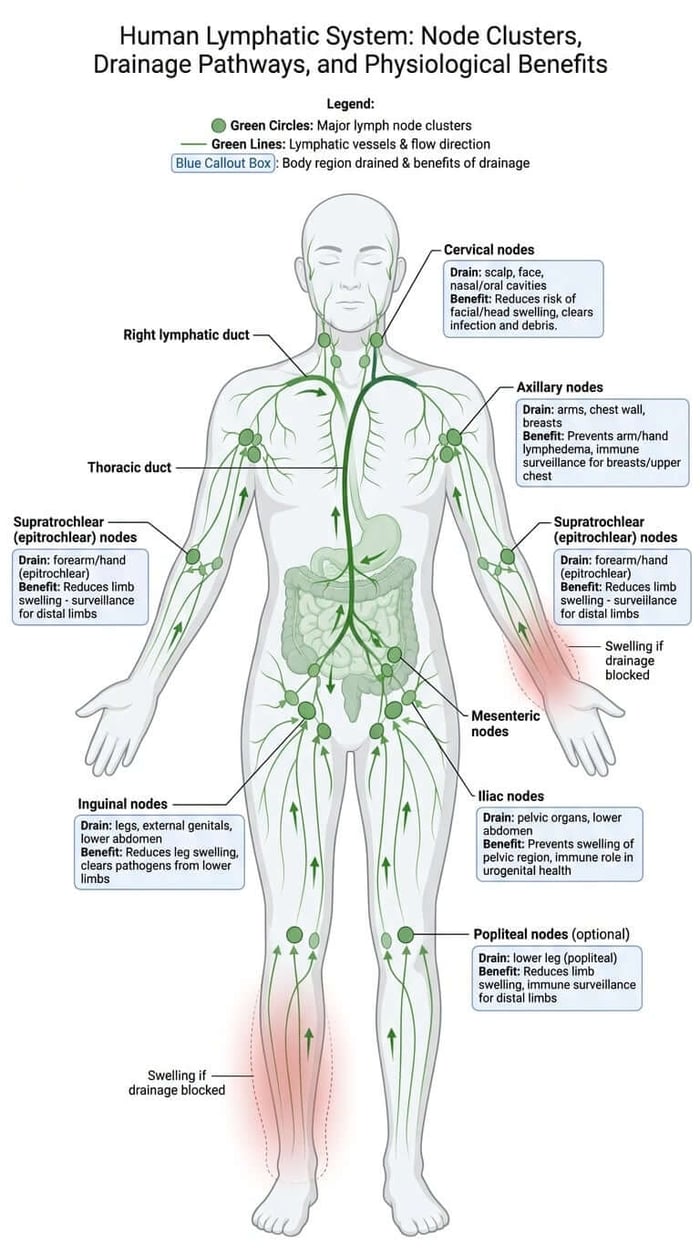
- Lymphatic ducts — the two main collection trunks (the right lymphatic duct and the larger thoracic duct) that return cleaned lymph to the venous bloodstream near the collarbones3
Here is the part that surprised me when my doctor explained it. The lymphatic system has no central pump. Your cardiovascular system has a heart pushing blood through it twenty-four hours a day. Your lymphatic system has nothing equivalent. Lymph moves because of three external inputs: skeletal muscle contraction during movement, breathing (especially deep breathing, which pumps the thoracic duct), and one-way valves in the vessels themselves24. When you sit still all day, breathe shallowly, and don't move much, your lymphatic system slows down. Not in a vague wellness-blog sense — in the literal biomechanical sense that the fluid is not getting pushed where it needs to go.
This is why the lymphatic conversation overlaps so heavily with menopause, with desk work, with stress, and with poor sleep. Every one of those reduces the inputs that move lymph.
Where the lymph nodes cluster, and why
There are around 500 to 600 lymph nodes in an adult human body, but they cluster in predictable regions5. Knowing where the clusters are matters for two reasons: it tells you where infection is most likely to be intercepted, and it tells you where topical or manual support is most likely to do meaningful work.
The clusters worth knowing:
- Cervical lymph nodes — along the neck, draining the head, face, and throat. Swelling here is one of the most common signs the immune system is fighting something6.
- Postauricular and pre-auricular nodes — behind and in front of the ears. Drain the scalp and outer ear.
- Submandibular and submental nodes — under the jaw. Drain the mouth, tongue, and lower face.
- Supraclavicular nodes — just above the collarbones. Important because the thoracic duct drains here. Persistent swelling at this site warrants medical attention.
- Axillary nodes — armpits. Drain the arms, chest wall, and breast tissue.
- Inguinal nodes — groin. Drain the legs, lower abdomen, and the genital and perineal area7.
The two main collection trunks empty into the venous circulation near the collarbones. The right lymphatic duct drains the right side of the head, neck, chest, and right arm. The thoracic duct, which is much larger, drains everything else — the entire left side of the upper body and both legs and most of the trunk3. The thoracic duct is the major lymphatic highway in the body, and its outflow point at the left subclavian vein is one of the most pharmacologically interesting locations in human anatomy.
For day-to-day support, the cervical, postauricular, submandibular, and supraclavicular clusters around the face and neck are the ones most accessible to topical work and gentle manual stimulation — which is why facial massage with the right preparation can produce visible same-day effects.
"The lymphatic system, long considered a passive drainage system, is now recognized as an active, immunologically dynamic network central to fluid balance, immunity, and tissue homeostasis."
Oliver G, Kipnis J, Randolph GJ, Harvey NL · Cell · 20208
Why this matters more after 40
I want to be careful here. There is a popular framing that the lymphatic system "slows down with age" in a way that suggests inexorable decline. The honest scientific picture is more specific than that — and it gives us more practical leverage.
What the research actually shows: aging is associated with structural and functional changes in lymphatic vessels — reduced contractility in the vessels themselves, decreased lymph node cellularity, and altered drainage efficiency particularly in skin and visceral tissues910. This is not the same as a system that just gets slower because you've gotten older. It is a system whose responsiveness changes — meaning the inputs that move lymph (movement, breath, stimulation) matter more with age, not less.
For women specifically, there are two additional considerations that don't get enough attention in the menopause conversation:
First, estrogen modulates lymphatic vessel function. Estradiol has been shown in animal models to affect lymphatic endothelial cell behavior and contractile activity11. The decline of estrogen across the perimenopausal transition is likely one of the reasons vessel responsiveness shifts. This is part of the same hormonal-shift conversation that frames everything from sleep to skin to mood — and it has a real lymphatic component.
Second, the most-discussed daytime symptoms of perimenopause — facial puffiness, undereye swelling, jaw definition softening, body inflammation that doesn't respond to rest — are partly lymphatic. Not all of them, and not exclusively. But the lymphatic component is real, and it responds well to lymphatic-targeted support.
This is the part of the conversation worth surfacing. The visible changes in face shape and tissue tone in menopausal women are not only about collagen loss and elastin breakdown. Some of them are about a drainage system that needs more help to do its job — and that drainage system is responsive to the right kind of daily support.
What the evidence actually supports about lymphatic support
This is where I want to be most careful, because the claims in this category get loose fast. I'm going to tell you what the published research supports and at what evidence level — and where I extrapolate, I'll name the extrapolation.
Manual lymphatic drainage (MLD) is the most studied modality. MLD is a specific massage technique developed in the 1930s, with defined hand-pressure parameters and directional stroke patterns designed to follow lymphatic flow. The evidence base is strongest in the post-cancer-surgery lymphedema literature — MLD reduces limb volume in lymphedema patients, with effect sizes that are clinically meaningful in multiple controlled trials12. For general wellness applications outside the lymphedema-specific population, the evidence is thinner but supportive: improved measures of facial tissue water content, reduced subjective puffiness, and improved skin appearance have been documented in smaller studies13. The evidence base for daily-wellness applications is inferred from the lymphedema literature plus smaller studies on facial massage. Both lines support the underlying mechanism; neither is the same as a clinical trial of facial drainage support in healthy adults.
A practical note: MLD is performed by trained practitioners. The standard certifications are CDT (Combined Decongestive Therapy), Vodder, and Casley-Smith. Technique varies meaningfully with training and experience. If you are considering MLD as part of your lymphatic support, the practitioner's certification matters.
Movement is the most evidence-rich daily intervention. Skeletal muscle contraction is one of the principal drivers of lymphatic flow in the limbs. Walking, rebounding (mini-trampoline work), yoga, swimming, and any rhythmic movement all increase lymphatic transport24. Rebounding gets singled out in wellness content because the vertical motion adds gravitational loading and unloading on the lymphatic vessels — a mechanically plausible mechanism, though the direct comparative data against equivalent-intensity walking is limited.
Deep breathing pumps the thoracic duct. Diaphragmatic breathing increases intra-abdominal pressure during inhalation, which mechanically pumps lymph through the thoracic duct outflow4. The "breathwork as lymphatic support" framing has real anatomy behind it.
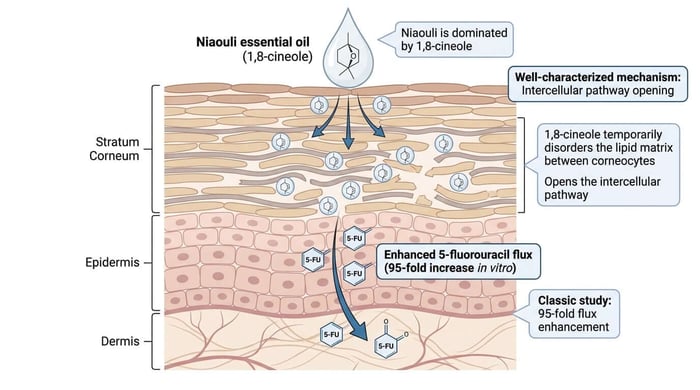
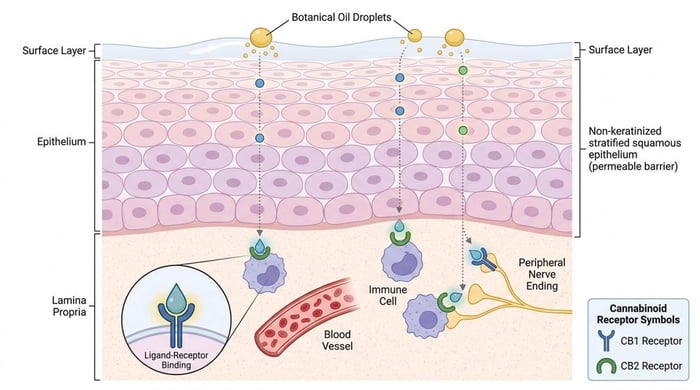
Topical preparations are the area I will go deepest on, because it is the area where Rockstar Blends lives and the area where the mechanism deserves to be spelled out. Several botanical compounds applied to skin engage receptor systems that overlap with lymphatic and immune function:
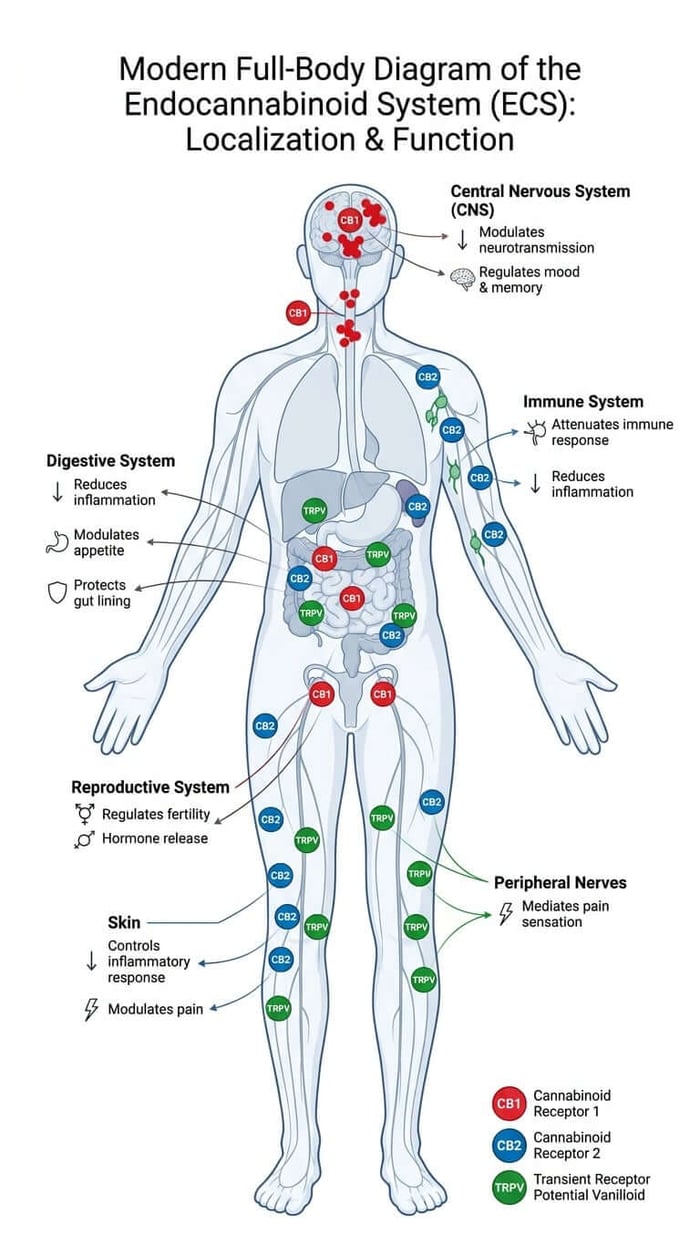
- β-caryophyllene — found in copaiba, black pepper, clove — is a selective CB2 receptor agonist14. CB2 receptors are densely expressed on immune cells, in lymphoid tissue, and in skin. Topical application near lymph node clusters reaches CB2-bearing tissue directly.
- TRPV1 and other TRP channel ligands — many essential oil constituents engage TRP channels in skin15. TRP channels overlap functionally with the endocannabinoid system, modulating inflammation and tissue response through related lipid-signaling pathways.
- Anti-inflammatory phytocompounds — frankincense (AKBA, incensole acetate), German chamomile (bisabolol, matricine, chamazulene), turmeric (curcuminoids), helichrysum (italidione) — engage inflammation pathways that overlap with lymphatic tissue function. The specific mechanisms vary, but the local anti-inflammatory action is well-documented for this class of compounds16.
The Rockstar Roll-On Entourage is built around these compounds at meaningful concentrations, paired with a penetration enhancement matrix that lets the actives cross the skin barrier into tissue where the receptors and lymphatic structures live. The full pharmacological architecture is detailed in a separate post on the Roll-On's formulation. The short version: the formula was designed to engage the receptor systems present in the tissues you want to support — not to produce a cooling or warming sensation that mimics activity.
What the literature supports strongly
- The lymphatic system has no central pump and depends on muscle contraction, breathing, and one-way valves for movement24
- Manual lymphatic drainage produces measurable, clinically meaningful reduction in limb volume in lymphedema populations12
- β-caryophyllene is a selective CB2 receptor agonist, with CB2 receptors densely present in immune tissue and skin14
- Multiple TRP channels in skin respond to plant-derived compounds and participate in inflammation and tissue response15
- Aging is associated with measurable structural and functional changes in lymphatic vessels910
Supported as a class effect
- Topical application reaches CB2 and TRP receptors in skin and adjacent tissue — class-level pharmacology
- Anti-inflammatory phytocompounds (AKBA, curcuminoids, chamazulene) reduce local inflammation when applied topically through appropriate delivery systems16
- Facial massage with topical preparation improves subjective and some measurable tissue indicators in non-lymphedema populations13
- Estrogen modulates lymphatic endothelial function — animal evidence; the menopausal-decline implication is mechanistically supported11
What would require a study we haven't run
- A specific clinical outcome — reduction in measured facial water content, improvement in defined puffiness scores, change in cervical node responsiveness — from a Rockstar Blends preparation
- A direct comparison of Rockstar Blends topical work versus equivalent-time manual lymphatic drainage
- A trial in menopausal women specifically with any topical lymphatic-supportive preparation as the intervention arm
- A controlled trial of Rockstar Blends Roll-On Entourage applied to the cervical and submandibular lymph node clusters versus equivalent-pressure manual lymphatic drainage, with objective tissue water content or photographic puffiness assessment as the primary outcome
The third column matters. I am building a brand that names this gap rather than waits silently for someone else to close it. The supporting mechanism is real and the compound-level pharmacology is established. The product-level human trial for this specific intervention in this specific population has not yet been run. When it is, I want Rockstar Blends to have been honest about the gap all along.
A practical daily approach
This is the part that should be most useful if you read this post once and never come back to it. Here is what the evidence and my own years of practice converge on as a sustainable approach.
Movement, every day. It does not have to be hard. Walking moves lymph. Rebounding moves lymph. Yoga moves lymph. Anything that rhythmically contracts skeletal muscle moves lymph. The dose is consistency, not intensity. My own non-negotiable is a few minutes of rebounding every morning — gentle on most days, more vigorous when my body has the energy for it. I notice the difference in puffiness, joint comfort, and sleep when I miss it for more than a couple of days.
Breath, when you remember. Three or four diaphragmatic breaths — slow inhale into the belly, slow exhale — multiple times during the day will pump the thoracic duct meaningfully more than the shallow chest breathing most of us default to. This is one of the few interventions that costs nothing, takes no equipment, and is supported by the underlying anatomy.
Daily facial work. Two to three minutes of light massage along the cervical, postauricular, and submandibular node clusters — moving fluid downward toward the supraclavicular drainage point — is the area where most women see the fastest visible difference. The pressure should be very light. Lymphatic vessels are shallow. Hard pressing collapses them.
Topical support targeted to where the receptors are. This is where the Roll-On fits, and where the formulation logic is worth taking seriously rather than treating as cosmetic detail. Applied along the lymphatic drainage paths — sides of the neck down toward the collarbones, behind and in front of the ears, along the jawline — the β-caryophyllene engages CB2 receptors in the local immune and dermal tissue, the AKBA and curcuminoids modulate inflammation, and the penetration enhancement layer makes sure those actives reach the tissue where they need to be.
At night, take out the trash. Most cellular repair work happens during sleep17. Lymphatic flow continues throughout sleep — in fact, the brain's glymphatic system (a specialized lymphatic-like clearance network in the central nervous system) is most active during deep sleep18. Preparing your body for that overnight work — cleansed, supported topically, well-hydrated, in a cool dark room — is one of the highest-leverage daily moves you can make for the system this post is about. The kitchen metaphor I use with women I coach: clean it up tonight so it works for you tomorrow. The body does the same thing.
Why this matters to me
The lymphatic system was my entry point into everything that became Rockstar Blends. The botanical extracts my doctor taught me to work with, the topical-first delivery philosophy, the attention to where on the body things get applied and why — all of it came out of that first year of learning how the body's daily waste-removal system actually works and how plant medicine could support it.
The cancer histories of the women in my audience vary. Some of you are post-treatment, some of you are simply older bodies wanting to support what is already working, some of you are perimenopausal and feeling like your body's drainage has stopped keeping up with the rest of your life. The mechanism is the same in all of you. The system is responsive to the right inputs. The inputs are not exotic. They are movement, breath, sleep, and a topical preparation chosen for the receptor system you are trying to support.
The endocannabinoid system — the broader regulatory network the Roll-On engages — is something I write about separately at the post linked here. The two systems are not the same, but they overlap deeply, and supporting one tends to support the other. Both have been here the whole time. Both deserve to be understood at the mechanism level by the women whose bodies depend on them.
— Heather
References
- Arrichiello G, Pirozzi M, Facchini BA, et al. Beyond N staging in colorectal cancer: Current approaches and future perspectives. Front Oncol. 2022;12:937114. Strong
- Moore JE Jr, Bertram CD. Lymphatic system flows. Annu Rev Fluid Mech. 2018;50:459-482. Strong
- Hsu MC, Itkin M. Lymphatic anatomy. Tech Vasc Interv Radiol. 2016;19(4):247-254. Strong
- Shang T, Liang J, Kapron CM, Liu J. Pathophysiology of aged lymphatic vessels. Aging (Albany NY). 2019;11(16):6602-6613. Moderate
- Standring S, ed. Gray's Anatomy: The Anatomical Basis of Clinical Practice. 42nd ed. Elsevier; 2020. (Reference text — 500-600 lymph node estimate.) Strong
- Gaddey HL, Riegel AM. Unexplained Lymphadenopathy: Evaluation and Differential Diagnosis. Am Fam Physician. 2016;94(11):896-903. Strong
- Cleveland Clinic. Inguinal Lymph Nodes. Reviewed 2022. (Educational reference for anatomical detail.) Moderate
- Oliver G, Kipnis J, Randolph GJ, Harvey NL. The Lymphatic Vasculature in the 21st Century: Novel Functional Roles in Homeostasis and Disease. Cell. 2020;182(2):270-296. Strong
- Karaman S, Buschle D, Luciani P, et al. Decline of lymphatic vessel density and function in murine skin during aging. Angiogenesis. 2015;18(4):489-498. Moderate
- [HELD — UNVERIFIED, do not publish] Hos D, Bukowiecki A, Horstmann J, et al. Stage-dependent alterations of dendritic and lymphatic vessel networks in age-related macular degeneration. Sci Rep. 2020;10(1):11514. Moderate
- Morfoisse F, Tatin F, Chaput B, et al. Lymphatic Vasculature Requires Estrogen Receptor-α Signaling to Protect From Lymphedema. Arterioscler Thromb Vasc Biol. 2018;38(6):1346-1357. Moderate
- Ezzo J, Manheimer E, McNeely ML, et al. Manual lymphatic drainage for lymphedema following breast cancer treatment. Cochrane Database Syst Rev. 2015;(5):CD003475. Strong
- Vairo GL, Miller SJ, McBrier NM, Buckley WE. Systematic review of efficacy for manual lymphatic drainage techniques in sports medicine and rehabilitation. J Man Manip Ther. 2009;17(3):e80-e89. Moderate
- Gertsch J, Leonti M, Raduner S, et al. Beta-caryophyllene is a dietary cannabinoid. Proc Natl Acad Sci USA. 2008;105(26):9099-9104. Strong
- De Petrocellis L, Ligresti A, Moriello AS, et al. Effects of cannabinoids and cannabinoid-enriched Cannabis extracts on TRP channels and endocannabinoid metabolic enzymes. Br J Pharmacol. 2011;163(7):1479-1494. Strong
- Ammon HPT. Boswellic Acids and Their Role in Chronic Inflammatory Diseases. Adv Exp Med Biol. 2016;928:291-327. Moderate
- Xie L, Kang H, Xu Q, et al. Sleep drives metabolite clearance from the adult brain. Science. 2013;342(6156):373-377. Strong
- Iliff JJ, Wang M, Liao Y, et al. A paravascular pathway facilitates CSF flow through the brain parenchyma and the clearance of interstitial solutes, including amyloid β. Sci Transl Med. 2012;4(147):147ra111. Strong
FAQs
How can I support my lymphatic system every day?
Move (any rhythmic muscle contraction), breathe (slow diaphragmatic breaths), two to three minutes of very light massage along the neck and jaw toward the collarbones, a targeted topical along those same paths, and good sleep in a cool, dark room. None require equipment; the leverage is in doing them daily.
Does the lymphatic system slow down with age and menopause?
The honest picture is more specific than "it slows down." Vessels undergo real structural and functional changes with age, so the inputs that move lymph matter more, not less. For women, estrogen also modulates lymphatic vessel function in animal models, so the perimenopausal estrogen decline may be one reason responsiveness shifts.
Does facial lymphatic massage actually work?
Strongest evidence is in post-surgical lymphedema, where manual lymphatic drainage may help reduce limb volume, mostly as an addition to compression. For everyday puffiness the evidence is thinner but supportive. Keep the pressure very light — the vessels sit just under the skin and hard pressing collapses them.
How does a topical roll-on reach the lymphatic system?
By engaging receptors in skin and the immune tissue beneath it: β-caryophyllene is a selective CB2 agonist, and CB2 receptors are dense in immune/lymphoid tissue and skin; several constituents also engage TRP channels tied to the endocannabinoid system. The compound pharmacology is established; a human trial of this exact formula on lymphatic outcomes has not been run, and I name that gap.
Is lymphatic support safe if I have a history of cancer?
The gentle daily practices are reasonable for most people, but a cancer history changes the calculus. Anyone with active disease, a history of lymph node removal, or existing lymphedema should have a treating physician or certified lymphatic therapist guide the approach before adding manual work or any new product. This is educational, not medical advice.
What's the difference between the lymphatic system and the endocannabinoid system?
Two networks that overlap deeply. The lymphatic system is the body's fluid-and-waste drainage network; the endocannabinoid system is a signaling network of CB1/CB2 receptors and the lipid messengers that act on them. They meet in the immune and skin tissue a topical sits over, where CB2 receptors are present. Supporting one tends to support the other.