Feed Your Head | Gut Microbiome, Hormones & Midlife Vitality | GenX Hits Menopause E30


Spotify

Apple

Audible
Table of Contents
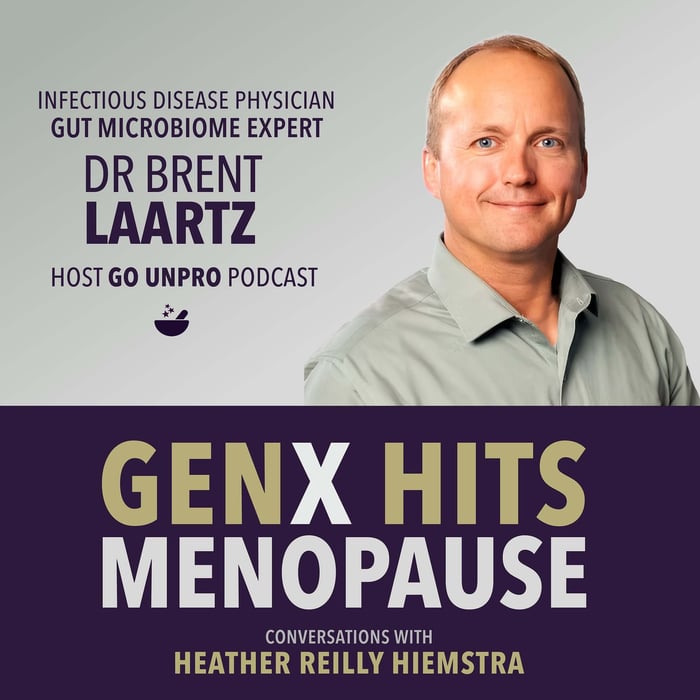
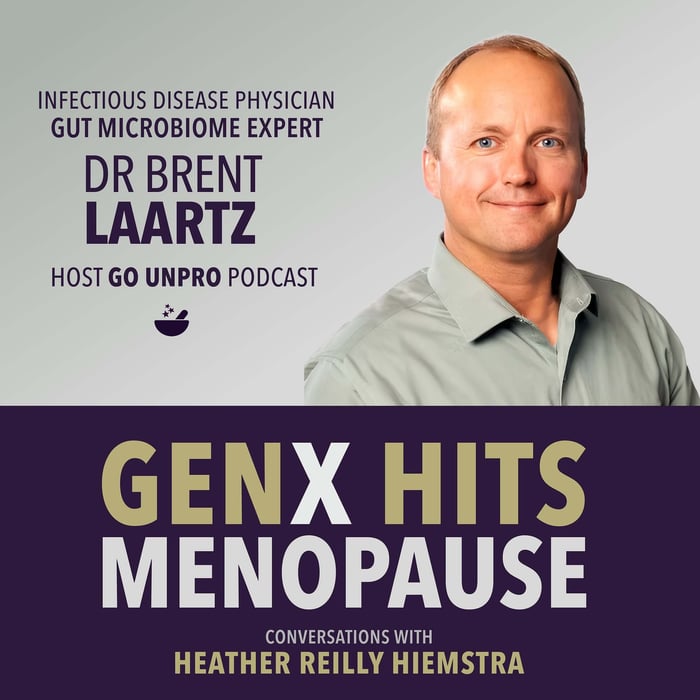 Heather Reilly-Hemstra sits down with Brent W. Laartz, MD FIDSA — infectious disease physician, associate professor at the University of South Florida, and, yes, bestselling spy novelist — to explore the organ that quietly runs everything: your gut.
Think of your microbiome as a sourdough starter (both Heather & Brent craft their own): neglect it and you get hockey pucks; feed it right and it rises to the occasion every time.
If your mood, sleep, hormones, or midlife energy feel like they’ve gone off the rails, this episode is your road map back — because the longevity you’re hunting for is already living in your intestines.
Conversations include:
- The Microbiome Footprint What your bacterial landscape says about your diet — and why a “bad footprint” sends addiction-center signals to your brain that make the Cheetos nearly impossible to resist.
- Microplastics & Menopause Hormones How forever chemicals and ultra-processed foods actively disrupt hormone health heading into perimenopause and menopause — and why the supplements those Instagram influencers are selling you may be worsening the very symptoms they promise to fix.
- Five Pillars of Health Diet, exercise, sleep, connection/creativity — and the fifth pillar most doctors skip: eliminating plastics and processed foods from your daily life, one step at a time.
- The Triathlete Bacteria Study The Lactobacillus and Veillonella species that helped world-class triathletes nearly double their sprint endurance by converting lactic acid into short-chain fatty acids — and what that means for every midlife body in the room.
- Actionable First Steps From homemade sauerkraut (no scale required — Google will guide you) to functional blood work outside your GP’s office, how to start rebuilding your microbiome today without overhauling your entire life overnight.
Dr. Brent brings more than the science of what lives in your gut, including the honest admission that physicians are often the last people practicing what they preach, and one man’s practical, no-cold-turkey roadmap to meaningful change.
Tune in to start feeding what feeds you — because a thriving microbiome is the backing track behind your hormones, your mood, your sleep, and every stage of vibrant midlife ahead.
About Dr. Brent Laartz
Dr. Brent Laartz is an infectious disease physician and Affiliate Associate Professor of Infectious Diseases and Tropical Medicine at the University of South Florida. His clinical expertise in the microbiome sits at the intersection of gut health, longevity science, and hormonal well-being — an expert guide for the midlife health questions most GPs don’t have bandwidth to answer in detail.
Driven by his own journey from “I thought I was healthy” to nearly pre-diabetic, Dr. Laartz launched the “Go Unpro” podcast — a doctor’s 52-week journey to an unprocessed life, available in video and audio wherever you listen. He is also the author of two bestselling spy thrillers, a poet and an avid sailor.
Dr. Brent is a firm believer that creativity, connection, and a good sourdough starter are non-negotiable pillars of a long life, and that natural prevention with diet and mindfulness can have a profound effect upon healing and overall health.
Episode Highlights
Gut Microbiome, Cravings, and the Addiction Cycle
“If your microbiome is good and healthy, you won’t crave the nasty stuff. Once you take a little step off of the wagon and you eat some junk food and you eat some processed foods, it’s very easy to just go off the cycle because your microbiome changes a little bit. The bacteria there, they’re changed a little bit to where they send signals to your brain that are the addiction centers, and then they tell you that, yeah, you should probably have more of those, whatever, Cheetos, or whatever you’re craving at the time.”
The Fifth Pillar: Microplastics and Hormone Health
“There’s five pillars of health, I think, and we talk about four — diet, exercise, sleep, and connection and creativity — but the fifth one I add in there is plastics and processed foods. You can always have your diet and be a Mediterranean diet, but if you’re eating packaged mostly vegan foods, it could still be just as bad for you because you’re getting those microplastics and some of those preservatives and forever chemicals into your body. Those microplastics — in addition to the Mediterranean diet — can really affect your hormone health, and heading into menopause, it can be definitely a detriment to your health.”
Plastics, Fertility, and the Hormone System
“They took ten different couples who had been trying to conceive for many years and changed their diet and took the plastics out of their life. Almost all of them were pregnant within a few months after they started. If that doesn’t show you exactly what these things are doing to your hormones in your body — number one, maybe preventing pregnancy, but also what’s it going to do with the rest of us in our childhood, in our development, and then after we’re not fertile anymore, what’s it going to do to our hormone system as we’re getting into menopause and perimenopause — whatever you might call it — and all of that affects our mental health and has a huge impact on our life.”
Sauerkraut, Skin, and the Limits of Probiotics
“I’m literally always on about the probiotics because of not having had chemo — I just got really lucky that way. Because it ends up making your skin look good and tight, and, you know, like, for 57, I feel good, and it’s probably a good gut microbiome. People come to me and want me to help them with some problem with Rockstar, and I’m like, I can give you this, but really, if we don’t get you some sauerkraut, I don’t know that it’s gonna work.”
The Triathlete Bacteria Study
“These triathletes who are already world-class triathletes could run almost twice as long without stopping on a treadmill at an all-out sprint after they introduced these types of bacteria. And it looks like it is because these bacteria produce short-chain fatty acids. When you are running to exhaustion, your muscles are getting into an anaerobic situation where they produce lactate — there’s usually lactic acid buildup — and they use short-chain fatty acids for their fuel, and that is being produced by those bacteria in their intestines.”
Share this episode
Know someone whose mood, sleep, or midlife energy feel like they’ve gone off the rails? Send them this episode — because the longevity they’re hunting for may already be living in their gut, just waiting to be fed.
FAQs
What are microplastics doing to hormones during perimenopause and menopause?
Microplastics and forever chemicals from ultra-processed foods and plastic packaging actively disrupt hormone health heading into perimenopause and menopause. Dr. Laartz cited a documentary in which ten couples who had been trying to conceive for years changed their diet and removed plastics — and nearly all became pregnant within a few months, illustrating how profoundly these chemicals interfere with the endocrine system. He also noted that many supplements marketed to menopausal women are sold in or alongside plastic packaging, meaning the products promising relief may be contributing to the hormone disruption in the first place. Start by swapping plastic food storage for glass or stainless steel and cutting ultra-processed packaged foods — even “mostly vegan” ones — as your first concrete step.
Who is Dr. Brent Laartz and why should I trust his advice on gut health and menopause?
Dr. Brent Laartz is an infectious disease physician and Affiliate Associate Professor at the University of South Florida whose clinical specialty puts the microbiome at the center of his practice. His credibility is sharpened by personal experience: despite being a physician and regular exerciser, he discovered his hemoglobin A1C was 5.6 — one point below the pre-diabetic threshold — which pushed him to research longevity and gut health seriously. He now documents his own 52-week journey to an unprocessed life on his podcast, Go Unpro (gounpro.com). Hear him describe his own health wake-up call in the early portion of the episode.
How does a “bad microbiome footprint” cause sugar cravings and make it hard to eat healthy?
A bad microbiome footprint means your gut is colonized by bacteria fed by sugar and processed food, and those bacteria send signals directly to the brain’s addiction centers telling you to eat more of the same. Dr. Laartz explained that even a few days of junk food shifts the bacterial population enough to trigger those cravings — Heather confirmed it firsthand after three nights of ice cream left her eyeing a brownie she wouldn’t normally want. The flip side is equally powerful: a healthy microbiome actively signals your brain to choose better foods, making clean eating easier over time. Adding a few spoonfuls of raw fermented sauerkraut daily is the low-barrier entry point both Heather and Dr. Laartz recommend to start shifting that footprint.
What is the triathlete bacteria study and what does it mean for midlife women’s endurance and energy?
Researchers gave world-class triathletes specific strains of Lactobacillus and Veillonella bacteria and found the athletes could run nearly twice as long at an all-out sprint on a treadmill compared to baseline. Dr. Laartz explained the mechanism: these bacteria convert lactic acid buildup in muscles into short-chain fatty acids, which the muscles then use as fuel when they’ve exhausted their glucose supply. The same short-chain fatty acids also feed colonocytes and support overall gut integrity — benefits relevant to any midlife body, not just elite athletes. If you want to target these strains specifically, Dr. Laartz mentioned finding a product called Vnella on Amazon as a potential source of Veillonella.
Do I need a doctor’s referral to get my gut microbiome tested, and will insurance cover it?
You do not need a physician referral — microbiome testing is available directly to consumers through several companies, though insurance rarely covers it and you’ll typically pay out of pocket (HSA funds can often be used). Dr. Laartz cautioned that many testing companies also sell the supplements to “fix” your results, so he recommended getting more than one test from independent sources before acting on the findings. Neither Dr. Laartz nor Heather could endorse a single definitive company, though Zoe (joinzoe.com) was mentioned as one option worth investigating. The practical takeaway: treat your first test as directional data, cross-reference with a second provider, and focus any intervention on diet and fiber — not just probiotic pills.