Bliss Is the System | The ECS, Estrogen & Perimenopause Connection | GenX Hits Menopause E31


Spotify

Apple

Audible
Table of Contents
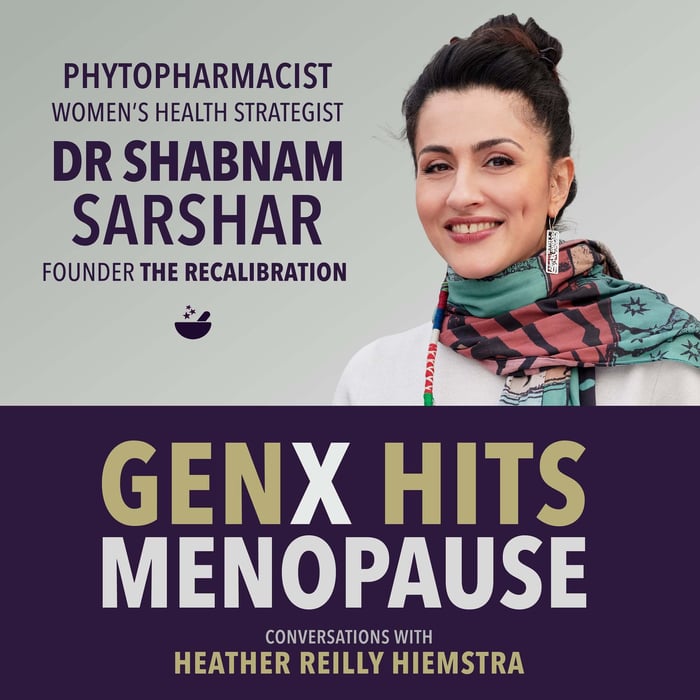
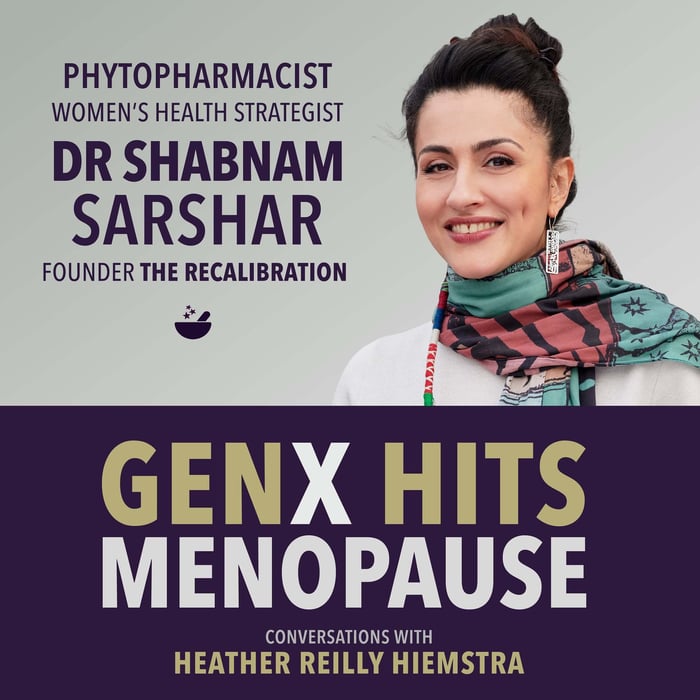 Heather gets together with Dr. Shabnam Sarshar - phytopharmacist, PhD in pharmaceutical biology and phytochemistry, and certified endocannabinoid medicine specialist - to pull back the curtain on a woman’s most overlooked hormonal partner in her body: the endocannabinoid system (ECS).
Like a soundboard running beneath every organ from head to toe, the ECS doesn’t just regulate sleep, mood, and pain — it’s in constant, bidirectional conversation with estrogen, mirroring it receptor for receptor across the very systems that go haywire in perimenopause.
If your moods are swinging without warning, your sleep is shot, your brain feels like it’s buffering, and nobody has given you a satisfying answer — this episode names the missing piece and hands you something you can actually start doing about it.
Conversations include:
- The Bliss Molecule You’re Running Low On Anandamide - Sanskrit for bliss - surges with estrogen at ovulation and crashes with it in perimenopause. Dr. Shabnam explains why the ECS, not just the ovaries, is driving the mood, pain, and sleep chaos of the perimenopause years.
- Why Men and Women Don’t Share the Same ECS Receptor distribution, endocannabinoid tone, and how women metabolize THC into stronger, longer-lasting metabolites — sex-specific biology that most practitioners have never been taught.
- 2-AG, Orgasm, and Depression The second major endocannabinoid, 2-arachidonoylglycerol, spikes after orgasm and is significantly depleted in women with major depressive disorder — a finding that reframes both pleasure and mental health as ECS territory.
- High-THC Culture and the Overloaded System What chronic high-dose THC actually does to ECS receptor sensitivity over time, why perimenopausal women are hitting the wall faster than they expect, and the case for never needing flower above 20% THC.
- The Simplest ECS Reset You Can Start Today The omega-3/omega-6 fatty acid ratio is the raw material your body uses to manufacture anandamide and 2-AG — and the Western diet is wrecking it. Dr. Shabnam’s most practical, no-prescription takeaway.
Tune in to recalibrate your understanding of how estrogen & perimenopause really relate — and walk away with the science that turns confusion into agency, and symptoms into signals you finally know how to read.
About Dr. Shabnam Sarshar
Dr. Shabnam Sarshar is a phytopharmacist and women’s health strategist specializing in cannabinoid science and female-specific physiology. With a PhD in Pharmaceutical Biology and Phytochemistry, and certifications in Endocannabinoid Medicine and Natural Women’s Medicine, she has spent over a decade across pharmaceutical research, medical advisory, and women’s health entrepreneurship.
Her career pivot into cannabinoid science began in a Berlin-based medical cannabis company, where she led two landmark projects: a pharmaceutical compounding kit designed to improve clinical cannabis formulations (including vaginal suppositories and ocular preparations), and a research initiative investigating cannabinoid-based therapeutics for endometriosis. That work launched her deep investigation into the endocannabinoid system’s role in female-specific biology.
Her work translates complex hormonal and sex-specific biological mechanisms into clinically actionable insights for research, product development, and medical education, and she advises medical and wellness companies on women-focused innovation. She is the founder of The Recalibration, a platform redefining midlife as a biological recalibration, not a decline.
Episode Highlights
The ECS, Estrogen & Perimenopause Connection
“The endocannabinoid system regulates sleep, mood, and pain — all three are the highlights of symptoms women go through in perimenopause. But what’s almost never part of the conversation: this system in a woman’s body also regulates the menstrual cycle. It has a direct interaction with our sex hormones — estrogen and progesterone, particularly estrogen. Estrogen and the endocannabinoid system are from the same receptor family. And you see that they are mirroring each other. It’s everywhere, and they are in bi-directional conversation and interaction. So — do we want to connect the dots or not?”
The Bliss Molecule You’re Running Low On
“What estrogen does — estrogen promotes the production of anandamide. All women have probably felt that around ovulation they feel better, there is less pain that we perceive. Basically, the whole of nature wanted to drug us and say, hey woman, everything is good, go out, have sex, reproduce. When estrogen is high, the anandamide level goes high. And then the estrogen declines and anandamide level comes down. When it comes to perimenopause, we lose that luxury of prediction — because estrogen and progesterone don’t decline in a straight line. They decline in a very oscillating and fluctuating way. In your perimenopause years, there come months where you have more estrogen in your body than you ever had in your reproductive life. And imagine all of these changes — the direct interaction with the endocannabinoid system that regulates your sleep, pain, and mood.”
The Brain Restructuring Nobody Told You About
“One of the first organs in the body that understands that something is going on in the ovaries — that it’s not getting enough estrogen, and it’s full of estrogen receptors — is our brain. So our brain is the first organ that understands that something is changing and it should start to adapt. That’s why we get a lot of brain fog, forgetfulness, that feeling of not being tired but being tired — all of that. It’s because our brain is going through a restructuring and trying to adapt to the new environment. And that restructuring is also happening in the amygdala — the amygdala is the part of the brain very much responsible for anxiety, fear, and trauma centers in women. And that also shrinks. So that’s why in many cultures they say this menopause transition is the transition of a woman to her wisdom years.”
The Simplest ECS Reset You Can Start Today
“The simplest way that you can start to balance your endocannabinoid system and feel the effects is by balancing your omega-3 and omega-6. Because basically these are the building blocks for our endocannabinoids. The Western diet is full of unhealthy omega-6 fatty acids — healthy omega-6 fatty acids are important for us, they are the building blocks for anandamide and 2-AG. So we have to bring that balance — more omega-3, very good quality omega-3.”
The Recalibration
“From my journey — because I am in this journey — whatever I read, whatever I think would be interesting for other women to know, the woman that I would love to know, I’m going to start writing about it, I’m going to start talking about it. I believe that science is also an art of storytelling, and once we understand the science behind what is happening to us, then we have the urgency, then we have the power to manage it and take control over it — instead of passively waiting for something to happen to us. We are looking for it, we are welcoming the challenge. That’s the whole idea of The Recalibration.”
Share this episode
Know a woman whose sleep is wrecked, her moods are unpredictable, and she’s been told it’s “just hormones” without any real explanation? Send her this episode — because this is the missing piece of the perimenopause conversation that finally connects the dots between estrogen, the endocannabinoid system, and everything she’s been feeling.
FAQs
Who is Dr. Shabnam Sarshar and what is her expertise in endocannabinoid medicine?
Dr. Shabnam Sarshar is a phytopharmacist and women’s health strategist with a PhD in Pharmaceutical Biology and Phytochemistry, certified in both Endocannabinoid Medicine and Natural Women’s Medicine. She pivoted into cannabinoid science while working at a Berlin-based medical cannabis company, where she led a research initiative on cannabinoid-based therapeutics for endometriosis — which she describes as her entry point into understanding the ECS’s role in female-specific biology. Her work focuses on translating complex hormonal science into clinically actionable guidance for women, and she founded a midlife wellness platform called The Recalibration. Find her Substack linked in the episode show notes.
What is the endocannabinoid system and how does it affect perimenopause symptoms like mood, sleep, and brain fog?
The endocannabinoid system (ECS) is a body-wide signaling network — present in every organ from head to toe — whose primary job is to maintain homeostasis, regulating sleep, mood, pain, immune function, and the menstrual cycle. Dr. Sarshar explains that estrogen and ECS receptors are from the same receptor family (G protein-coupled receptors) and “mirror each other” throughout the body, meaning that as estrogen fluctuates wildly in perimenopause, it directly destabilizes ECS tone. The result is the unpredictable sleep disruption, mood swings, pain sensitivity, and brain fog that perimenopause is known for — all of which are ECS-regulated functions. The practical implication: supporting ECS tone is not separate from supporting hormonal health; they are the same conversation.
What is anandamide and why does it drop during perimenopause?
Anandamide — from the Sanskrit word for "bliss" — is an endocannabinoid produced on demand in your body, and its function closely mirrors that of THC: it binds to CB1 receptors to reduce pain perception and improve mood. Dr. Sarshar explains that estrogen directly promotes anandamide production, which is why women typically feel better and have higher pain tolerance around ovulation when estrogen peaks. In perimenopause, as estrogen oscillates erratically rather than declining in a straight line, anandamide levels become equally unpredictable, stripping away the rhythmic mood and pain regulation that premenopausal women rely on without even realizing it. Understanding this link is the first step toward targeting ECS support intentionally during the perimenopause transition.
What does chronic high-THC cannabis use do to the endocannabinoid system in perimenopausal women?
Chronic high-dose THC overstimulates the ECS until receptor sensitivity downregulates and the system essentially stops responding, which Dr. Sarshar describes as the body saying "I'm not going to accept this anymore." Women are hit harder than men because they metabolize THC into stronger metabolites that stay in the body longer due to higher fat cell percentages, and after three to four days of use, women show significantly higher plasma THC levels than men at the same dose. Dr. Sarshar recommends that no one needs flower above 20% THC, and that any THC-containing products should be used in the late evening — never during the day — to avoid further impairing cognitive function that is already under stress during perimenopause.