
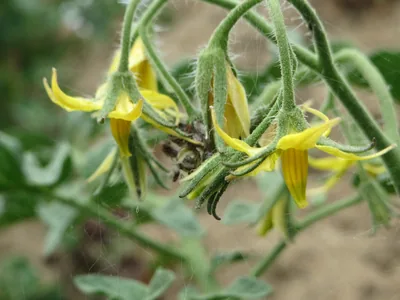
Golden apples.
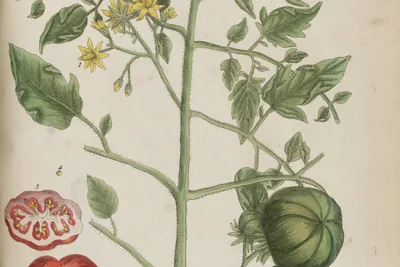
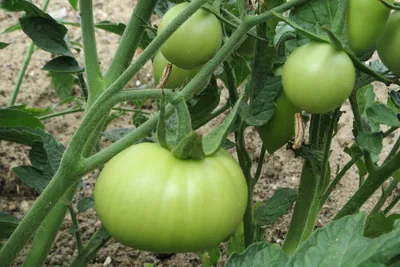
In 1554 the Sienese physician Pietro Andrea Mattioli published his great Latin commentary on Dioscorides, printed, as its title page promised, with a great many pictures of plants and animals. In the chapter on the mandrake, after the eggplant, he describes "another kind" that "has begun to be imported". It is flattened like a round apple and ribbed like a melon, "green at first, then, when it has ripened, golden in some plants and red in others." And so, he writes, it is commonly called pomi d'oro, "that is, golden apples". They are eaten, he adds, the same way as the eggplant.[1] Dioscorides could not have known it; the plant is from the other side of the world.
Italian kept the name. Pomodoro is still the word, half a millennium later, for a fruit Mattioli met as a novelty.
On this page
From the Peruvian desert.
The tomato's own story began far from Siena. Two species are thought to be involved in its making: the wild Solanum pimpinellifolium, which grows in the deserts of Peru, and the tomato itself in two forms, a semi-wild cherry tomato and the cultivated fruit. In 2022 a team in Valencia traced its path in the genome. As the wild plant spread slowly north toward the rainforests of Mexico, it became the semi-domesticated cherry tomato, S. lycopersicum var. cerasiforme. Along the way, genes for photosynthesis and flowering time were selected as the plant adapted to new latitudes. The Peruvian and Ecuadorian cherry tomatoes seen today are later hybrids. The team checked the model against where each sample had been collected and against the plants' form, and both supported it.[2]
A 2020 study added a twist. The semi-wild cherry tomato may be older than domestication itself, and many of the traits that seem typical of a cultivated tomato first arose in South American cherry tomatoes, were lost or weakened as those plants moved north, and were then selected all over again in the common cultivated tomato before it spread around the world.[3] Its best traits were, in effect, selected twice. The same work points to overlooked wild and semi-wild tomatoes that still carry useful genes for breeders.
Pressed from what juicing leaves behind.
Tomato seed oil has no ancient story, and it makes no pretence of one. It is a by-product. When tomatoes are processed into juice and purée, the seeds and skins are left behind as pomace, and the seeds can be pressed or extracted for oil.
In 2021 a group in Romania and Greece analysed tomato seed oil and peels from industrial processing, from both the "cold break" (65 to 75 °C) and the "hot break" (85 to 95 °C) methods. The oil met the standards of generally accepted edible oils. Linoleic acid, an omega-6, was the main fatty acid, at 61.73 per cent, and syringic acid was one of the two main phenolic acids in the cold-break samples.[4] A 2023 study from India compared tomato seed oil extracted with water against oil extracted with a solvent. Both came out about 58 per cent polyunsaturated and 24 per cent monounsaturated, with hardly any difference between them. The team also ran four standard tests of how far the oil had oxidised, and measured its antioxidant activity in three different assays.[5]

What linoleic acid does in skin.
Linoleic acid matters for a reason that has nothing to do with tomatoes. It is the fatty acid the skin threads into its own barrier lipids, the ceramides that hold the outer layer together. The key ones, the ω-O-acylceramides, carry linoleic acid, and without them the barrier fails.
In 2022 a group in Japan showed this sharply in mice. An enzyme, Acsl1, activates linoleic acid for the job. Mice born without it lost those linoleic ceramides and had such severe barrier defects that they did not survive. The skin stores linoleic acid in triglycerides, a reservoir it draws on to build those ceramides, and in these mice the linoleic triglycerides were depleted while the others were not.[6]
That is the mechanism of the fatty acid, and it holds wherever the linoleic acid comes from. No study has yet tested tomato seed oil itself on skin. What tomato seed oil brings to a blend is a carrier rich in the fatty acid the skin uses for its barrier.
The antioxidants it carries.
A 2022 study from Alicante compared two modern ways of getting oil from tomato seeds: microwave-assisted extraction at about 56 °C, and supercritical CO₂ at about 60 °C and 400 bar. The microwave method gave more oil, 25.3 per cent of the seed against 16.9 per cent. The fatty acids were much the same either way, about 80 per cent unsaturated.[7]
The oil's antioxidant activity tracked its vitamin E, and the dominant form was γ-tocopherol, at 260.3 milligrams per kilogram, ahead of α-tocopherol.[7] An oil this rich in linoleic acid needs protecting from air. Its own tocopherols are part of that protection, and so are a fresh supply and a closed bottle. The authors call the seeds a by-product that is "currently underexploited".[7]
And lycopene, carefully.
Lycopene is the red pigment of the tomato fruit, not of its seed. In the 2021 by-product study it was the main carotenoid in the samples, at 37.43 milligrams per 100 millilitres, and the carotenoids and phenolics shifted with the heat of the processing.[4] A seed oil can carry some of the fruit's colour with it, depending on how it was made. How much a particular oil holds is a question for its certificate of analysis. Anyone sensitive to tomatoes or other nightshades should patch test first.
"Our findings extend the boundaries of tomato processing industry by validating that tomato seed oil is a bioactive rich edible oil."
References
- [1] Mattioli PA. Commentarii in libros sex Pedacii Dioscoridis Anazarbei de medica materia. Venice: Valgrisi, 1554, Book IV, commentary on Mandragoras ("mala aurea", pomi d'oro); translated from the Latin by the editors. ↩
- [2] Blanca J, Sanchez-Matarredona D, Ziarsolo P, et al. Haplotype analyses reveal novel insights into tomato history and domestication driven by long-distance migrations and latitudinal adaptations. Hortic Res. 2022;9:uhac030. PMID 35184177 · doi:10.1093/hr/uhac030 ↩
- [3] Razifard H, Ramos A, Della Valle AL, et al. Genomic evidence for complex domestication history of the cultivated tomato in Latin America. Mol Biol Evol. 2020;37(4):1118–1132. PMID 31912142 · doi:10.1093/molbev/msz297 ↩
- [4] Szabo K, Dulf FV, Teleky BE, et al. Evaluation of the bioactive compounds found in tomato seed oil and tomato peels influenced by industrial heat treatments. Foods. 2021;10(1):110. PMID 33430280 · doi:10.3390/foods10010110 ↩
- [5] Ghosh S, Ghosh M, Bhattacharyya DK. Comparative study of chemical characteristic analysis of different solvent-extracted Solanum lycopersicum (tomato seed) oil. Appl Biochem Biotechnol. 2023;195(4):2149–2157. PMID 35778626 · doi:10.1007/s12010-022-04062-9 ↩
- [6] Kato A, Ito M, Sanaki T, et al. Acsl1 is essential for skin barrier function through the activation of linoleic acid and biosynthesis of ω-O-acylceramide in mice. Biochim Biophys Acta Mol Cell Biol Lipids. 2022;1867(2):159085. PMID 34813948 · doi:10.1016/j.bbalip.2021.159085 ↩
- [7] Solaberrieta I, Mellinas AC, Espagnol J, Hamzaoui M, Jiménez A, Garrigós MC. Valorization of tomato seed by-products as a source of fatty acids and bioactive compounds by using advanced extraction techniques. Foods. 2022;11(16):2408. PMID 36010408 · doi:10.3390/foods11162408 ↩
FAQs
Is tomato seed oil made from tomatoes?
From their seeds. When tomatoes are made into juice and purée, the seeds are left behind, and they are pressed or extracted for oil.
Does tomato seed oil contain lycopene?
It can, depending on how it is made. Lycopene is the red pigment of the tomato fruit, not the seed, so the amount in a seed oil varies with processing.
What is tomato seed oil made of?
Mostly linoleic acid, an omega-6 fatty acid, at about 60 per cent in the oils studied, with vitamin E, mainly γ-tocopherol.
Why does linoleic acid matter for skin?
The skin builds linoleic acid into the ceramides of its outer barrier. That is a property of the fatty acid; tomato seed oil itself has not yet been tested on skin.
Does tomato seed oil have a long history?
No, and that is part of its appeal: it is a modern, upcycled oil. The tomato fruit reached Europe in the sixteenth century, when an Italian herbal called it pomi d'oro, golden apples.
Which Rockstar products contain tomato seed oil?
Tomato seed oil is part of the base of Rockstar Man, with fractionated coconut.