

October 18 is World Menopause Day, and this year the International Menopause Society chose its theme: Chronic Pain At Midlife. Chronic pain, the society says, "affects a significant proportion of women during and after the menopause transition, yet it remains underestimated in both research and care."[1]
Here is what the research says about estrogen and the aches of the menopause transition in the context of the endocannabinoid system, and what it doesn't say yet.
On this page
- Everything hurts.
- You're not imagining it.
- Meet your endocannabinoid system: pain edition.
- Estrogen and the endocannabinoid system: a working relationship.
- What the cannabis and pain research says.
- Full spectrum, isolates and a plot twist from the spice rack.
- What we can't say yet.
- What you can do right now.
Chronic pain at midlife should be recognized as a key component of menopause care, requiring gender-sensitive, individualized, and multidisciplinary approaches, alongside further research to address gaps in knowledge and care.
Everything hurts.
So if you've started groaning when you stand up, you're in large company:
- A 2024 review estimates that more than 70% of women have musculoskeletal symptoms through the menopause transition, and that about 1 in 4 are disabled by them.[2]
- In a 2020 meta-analysis of 16 studies, 71% of perimenopausal women reported musculoskeletal pain.[3]
- In a 2026 meta-analysis of 93,021 women, 40% had muscle or joint pain before menopause, 57% in perimenopause and 59% after.[4]
By the end of this post you'll know why midlife pain is real and has a name, what your endocannabinoid system does with pain, what the cannabis research shows, including where it falls flat, and what you can do this month.
You're not imagining it.
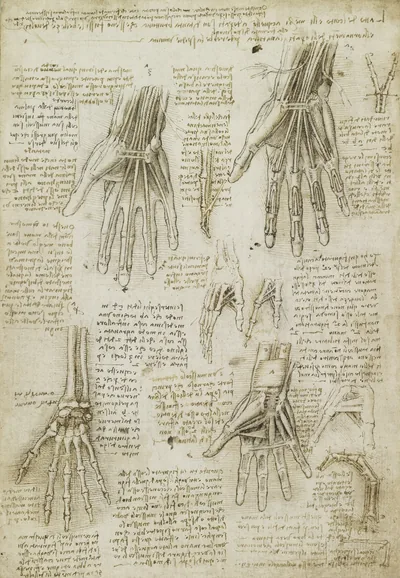
In 2024 a team led by an orthopedic surgeon gave the pattern a name: the musculoskeletal syndrome of menopause[2].
It gathers things women have long been told were separate, or just age: joint pain, loss of muscle, loss of bone and progression of osteoarthritis, among others.
Finally, a diagnosis with a name long enough to match how long it takes me to get out of a car.
The thread running through it is estrogen. The authors describe these symptoms as largely influenced by the rise and fall of estrogen through the transition.[2] That doesn't make menopause the cause of every ache after 45. It does mean pain in these years deserves to be taken seriously and looked at, rather than waved off.
Meet your endocannabinoid system: pain edition.
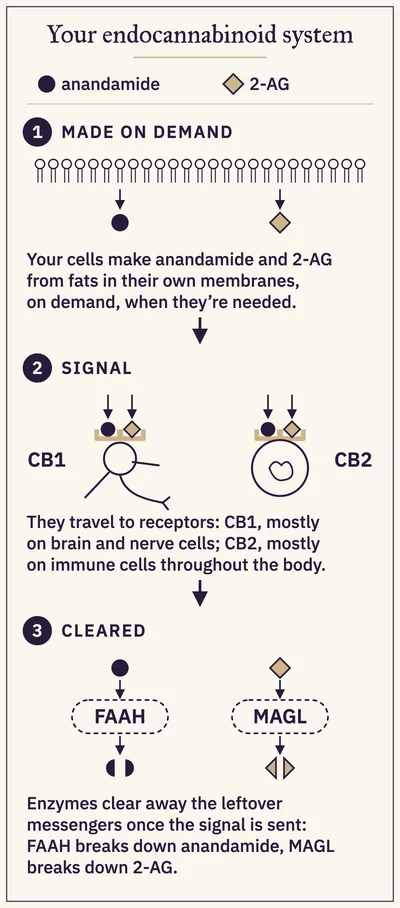
Your endocannabinoid system (ECS) is a signaling network with three parts:[5]
- Receptors. CB1 sits mostly in the brain and nervous system. CB2 sits mostly in the rest of the body, especially on cells of the immune system.
- Your own cannabinoids. Anandamide and 2-AG, made by your cells from fats in their own membranes, on demand, when they're needed.
- Enzymes that build those messengers, and enzymes that clear away the leftovers once the signal is sent. FAAH breaks down anandamide; MAGL breaks down 2-AG.
Think of it as the sound engineer at the board, nudging the levels so nothing goes to 11.
In animal studies, the ECS sits along the pathways that carry and process pain, in the brain, the spinal cord and the nerves. Switching on CB1 and CB2 turns pain signaling down in those animal models, and after an injury the nervous system can start making CB2.[5] CB2 is the receptor on the inflammation-and-immune side of the board.
Lab studies show your skin has its own working ECS, which helps control how skin cells grow, mature and survive.[6] That is why topicals are a reasonable scientific question.
For the full tour, start with The Endocannabinoid System: Here the Whole Time.
Estrogen and the endocannabinoid system: a working relationship.
Estrogen and your ECS work together. One clear example is FAAH, the enzyme that breaks down anandamide. In lab and animal studies, estrogen regulates FAAH, and less FAAH leaves more anandamide signaling.[7]
In female rats, part of estrogen's effect on mood-related behavior runs through the ECS.[7] Researchers also see sex differences in how the ECS handles pain, and in how cannabinoids act on it, mostly in animals so far.[8]
So here is the hypothesis, labeled as one: when estrogen falls and swings through the transition, the ECS's pain and inflammation tone may shift too. It is a fair question. It has not been tested in menopausal women.
We spent a whole episode of GenX Hits Menopause on this connection: Bliss Is the System.
What the cannabis and pain research says.
Here are some major scientific reviews in plain words.
The pain scientists. In 2021 the International Association for the Study of Pain said it "does not currently endorse general use of cannabis and cannabinoids for pain relief," because high-quality clinical evidence is lacking.[9] The task force's own review of 36 randomized trials found that the evidence "neither supports nor refutes" claims that cannabinoids help pain.[10]
Nerve pain. Cochrane updated its review of cannabis-based medicines for chronic nerve pain in January 2026, across 21 studies and 2,187 people. Its plain-language summary: "Due to a lack of robust evidence, the benefits and harms of cannabis-based medicines are unclear."[11]
The newest review. A 2026 review of 25 randomized trials found that products high in THC, or with THC and CBD in similar amounts, may bring small short-term improvements in pain, mostly nerve pain, with more side effects.[12] The US federal review behind it found that CBD taken by mouth on its own was not linked to less pain, and that the evidence on CBD applied to the skin is still insufficient.[13]
Pain medicines. Whether cannabis helps people use fewer opioids is still uncertain; the certainty of that evidence is low.[14]
Nearly all of this research is on prescription, oral, sublingual or inhaled cannabinoids, often heavy in THC. That is a different universe from a hemp oil you put on your skin.
Full spectrum, isolates and a plot twist from the spice rack.
An isolate is one purified molecule, such as CBD alone. Full-spectrum hemp carries the plant's wider mix of cannabinoids, terpenes and other compounds. Most clinical trials test isolates or pharmaceutical formulas, so their results, good or bad, can't be carried over to full-spectrum products, in either direction.
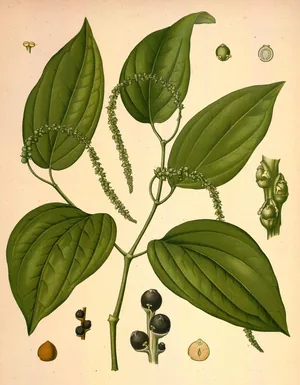
The plot twist is in the spice rack. Beta-caryophyllene, a terpene common in the essential oils of many spice and food plants, binds and switches on CB2 receptors, and in mice, given by mouth, it reduced an inflammatory response through CB2 without acting on the mind. The researchers who showed it called it "a dietary cannabinoid."[15] That work is on the isolated molecule, in cells and mice.
On topicals: one randomized trial of 18 people with thumb arthritis found that a CBD cream, CBD in shea butter used for two weeks, improved pain and function.[16] A larger trial of 136 people with hand osteoarthritis or psoriatic arthritis, taking synthetic CBD by mouth for 12 weeks, found it worked no better than placebo.[17] One small trial is a question, not an answer. I love a good question. I won't sell it to you as an answer.
The blends are made with full-spectrum hemp, never isolated cannabinoids. So when I cite a study on isolated CBD or a single terpene, I'm teaching you the biology, not describing what's in a bottle.
What we can't say yet.
This is the part I think matters most.
- No trial has tested any cannabinoid, on the skin or otherwise, for menopausal musculoskeletal pain. The studies are mostly in nerve, cancer and arthritis pain.
- No good-quality trial has tested full-spectrum hemp on the skin for joint pain. The one positive topical trial used a CBD cream, in 18 people, for two weeks.[16]
- We don't know whether a topical reaches a joint in meaningful amounts. The skin's ECS is real; reaching deeper tissue from a skin oil is unproven.
- The estrogen, ECS and pain chain is mostly animal biology. We can't yet say that menopause lowers ECS tone in women, or that restoring it changes pain.
- "Clinical endocannabinoid deficiency" is a hypothesis, not a diagnosis. It proposes that conditions such as migraine, fibromyalgia and irritable bowel syndrome come from too little endocannabinoid signaling.[18]
- Whether cannabis reduces the use of opioids or other pain medicines is uncertain.[14]
Naming the gaps is part of reading the studies.
What you can do right now.
Lift something. I say it all the time.
In a 2024 review of 12 trials in women after menopause, resistance training improved strength and aerobic capacity.[19] The researchers who named the musculoskeletal syndrome want clinicians and women to know it, so its risks are assessed and managed early.[2]

Protect your sleep. Sleep and pain feed each other, and poor sleep is "a stronger, more reliable predictor of pain than pain is of sleep impairments."[20] Protecting sleep is pain care.
Talk to a clinician about every option, hormone therapy included. In the Women's Health Initiative trial of estrogen pills alone, in 10,739 women who had had a hysterectomy, 76.3% of women on estrogen reported joint pain after a year, against 79.2% on placebo: a modest reduction that held through year three, though joint swelling was more common on estrogen.[21] Hormone therapy isn't right for everyone.
Get unexplained pain looked at. The International Menopause Society wants chronic pain recognized as part of menopause care, with individualized, multidisciplinary help.[1]
Frequently Asked Questions.
What is the theme of World Menopause Day 2026?
The International Menopause Society chose "Chronic Pain At Midlife" for October 18, 2026. The campaign stresses that chronic pain during and after the menopause transition is underestimated in research and care, and calls for individualized, multidisciplinary care.[1]
Why do my joints hurt during menopause?
The fall in estrogen is associated with joint pain, loss of muscle and bone, and progression of osteoarthritis. In 2024 researchers named this the musculoskeletal syndrome of menopause and estimated that more than 70% of women have musculoskeletal symptoms through the transition.[2] New or lasting pain deserves a clinician's evaluation.
What does the endocannabinoid system have to do with pain?
The endocannabinoid system is a signaling network: CB1 and CB2 receptors, the body's own cannabinoids anandamide and 2-AG, and the enzymes that make and break them down. In animal research it helps regulate pain processing and inflammation.[5] In animal studies, estrogen interacts with it, for example by regulating FAAH, the enzyme that breaks down anandamide.[7] How this plays out in menopausal women hasn't been studied directly.
Does CBD help menopause joint pain?
No trial has studied CBD or any other cannabinoid for menopausal joint pain. In hand osteoarthritis and psoriatic arthritis, a 12-week trial of CBD taken by mouth in 136 people found no benefit over placebo.[17] One two-week trial of a CBD cream in 18 people with thumb arthritis reported improvement.[16] The International Association for the Study of Pain and a 2026 review of 25 trials both find the evidence for cannabinoids in chronic pain limited, and a US federal review found CBD alone, taken by mouth, was not linked to less pain.[9][12][13]
What's the difference between full-spectrum hemp and CBD isolate?
An isolate is a single purified compound, usually CBD. Full-spectrum hemp extract carries the plant's wider mix of cannabinoids, terpenes and other compounds. Because most studies test isolates or pharmaceutical products, their results can't be assumed to apply to full-spectrum products.
References.
- [1] International Menopause Society. World Menopause Day 2026: Chronic Pain At Midlife. Accessed 14 October 2026. ↩
- [2] Wright VJ, Schwartzman JD, Itinoche R, Wittstein J. The musculoskeletal syndrome of menopause. Climacteric. 2024;27(5):466-472. doi:10.1080/13697137.2024.2380363. PMID: 39077777. ↩
- [3] Lu CB, Liu PF, Zhou YS, et al. Musculoskeletal pain during the menopausal transition: a systematic review and meta-analysis. Neural Plast. 2020;2020:8842110. doi:10.1155/2020/8842110. PMID: 33299396. ↩
- [4] Kruse C, McKechnie T, Dworsky-Fried J, et al. Musculoskeletal manifestations of perimenopause: a systematic review and meta-analysis of 93,021 women. JB JS Open Access. 2026;11(1):e25.00254. doi:10.2106/JBJS.OA.25.00254. PMID: 41523660. ↩
- [5] Finn DP, Haroutounian S, Hohmann AG, et al. Cannabinoids, the endocannabinoid system, and pain: a review of preclinical studies. Pain. 2021;162(Suppl 1):S5-S25. doi:10.1097/j.pain.0000000000002268. PMID: 33729211. ↩
- [6] Bíró T, Tóth BI, Haskó G, Paus R, Pacher P. The endocannabinoid system of the skin in health and disease: novel perspectives and therapeutic opportunities. Trends Pharmacol Sci. 2009;30(8):411-420. doi:10.1016/j.tips.2009.05.004. PMID: 19608284. ↩
- [7] Hill MN, Karacabeyli ES, Gorzalka BB. Estrogen recruits the endocannabinoid system to modulate emotionality. Psychoneuroendocrinology. 2007;32(4):350-357. doi:10.1016/j.psyneuen.2007.02.003. PMID: 17391861. ↩
- [8] Blanton HL, Barnes RC, McHann MC, et al. Sex differences and the endocannabinoid system in pain. Pharmacol Biochem Behav. 2021;202:173107. doi:10.1016/j.pbb.2021.173107. PMID: 33444598. ↩
- [9] IASP Presidential Task Force on Cannabis and Cannabinoid Analgesia. International Association for the Study of Pain Presidential Task Force on Cannabis and Cannabinoid Analgesia position statement. Pain. 2021;162(Suppl 1):S1-S2. doi:10.1097/j.pain.0000000000002265. PMID: 33729207. ↩
- [10] Fisher E, Moore RA, Fogarty AE, et al. Cannabinoids, cannabis, and cannabis-based medicine for pain management: a systematic review of randomised controlled trials. Pain. 2021;162(Suppl 1):S45-S66. doi:10.1097/j.pain.0000000000001929. PMID: 32804836. ↩
- [11] Ateş G, Welsch P, Klose P, et al. Cannabis-based medicines for chronic neuropathic pain in adults. Cochrane Database Syst Rev. 2026;1(1):CD012182. doi:10.1002/14651858.CD012182.pub3. PMID: 41548880. ↩
- [12] Chou R, Fu R, Ahmed AY, Morasco BJ. Cannabis-based products for chronic pain: an updated systematic review. Ann Intern Med. 2026;179(2):230-241. doi:10.7326/ANNALS-25-03152. PMID: 41429020. ↩
- [13] Chou R, Ahmed AY, Dana T, et al. Living systematic review on cannabis and other plant-based treatments for chronic pain: 2025 update. AHRQ Comparative Effectiveness Review No. 250 (Publication No. 25-EHC036). Rockville (MD): AHRQ; 2025 Jul. PMID: 40956916. ↩
- [14] Noori A, Miroshnychenko A, Shergill Y, et al. Opioid-sparing effects of medical cannabis or cannabinoids for chronic pain: a systematic review and meta-analysis of randomised and observational studies. BMJ Open. 2021;11(7):e047717. doi:10.1136/bmjopen-2020-047717. PMID: 34321302. ↩
- [15] Gertsch J, Leonti M, Raduner S, et al. Beta-caryophyllene is a dietary cannabinoid. Proc Natl Acad Sci U S A. 2008;105(26):9099-9104. doi:10.1073/pnas.0803601105. PMID: 18574142. ↩
- [16] Heineman JT, Forster GL, Stephens KL, et al. A randomized controlled trial of topical cannabidiol for the treatment of thumb basal joint arthritis. J Hand Surg Am. 2022;47(7):611-620. doi:10.1016/j.jhsa.2022.03.002. PMID: 35637038. ↩
- [17] Vela J, Dreyer L, Petersen KK, et al. Cannabidiol treatment in hand osteoarthritis and psoriatic arthritis: a randomized, double-blind, placebo-controlled trial. Pain. 2022;163(6):1206-1214. doi:10.1097/j.pain.0000000000002466. PMID: 34510141. ↩
- [18] Russo EB. Clinical endocannabinoid deficiency reconsidered: current research supports the theory in migraine, fibromyalgia, irritable bowel, and other treatment-resistant syndromes. Cannabis Cannabinoid Res. 2016;1(1):154-165. doi:10.1089/can.2016.0009. PMID: 28861491. ↩
- [19] González-Gálvez N, Moreno-Torres JM, Vaquero-Cristóbal R. Resistance training effects on healthy postmenopausal women: a systematic review with meta-analysis. Climacteric. 2024;27(3):296-304. doi:10.1080/13697137.2024.2310521. PMID: 38353251. ↩
- [20] Finan PH, Goodin BR, Smith MT. The association of sleep and pain: an update and a path forward. J Pain. 2013;14(12):1539-1552. doi:10.1016/j.jpain.2013.08.007. PMID: 24290442. ↩
- [21] Chlebowski RT, Cirillo DJ, Eaton CB, et al. Estrogen alone and joint symptoms in the Women's Health Initiative randomized trial. Menopause. 2013;20(6):600-608. doi:10.1097/GME.0b013e31828392c4. PMID: 23511705. ↩
This article is for educational purposes only and isn't medical advice. It hasn't been evaluated by the Food and Drug Administration. Rockstar Blends products are not intended to diagnose, treat, cure or prevent any disease. Talk with your healthcare provider about pain, menopause symptoms, hormone therapy, or before using any cannabis or hemp product, especially if you take medications.